Guide available
In this guide
Appendix and appendicitis
The video contains English captions.
When to seek urgent help
- Persistent or worsening abdominal pain, especially pain moving to the lower right, needs urgent assessment today. Do not wait for fever or every typical symptom.
- Severe widespread pain, a rigid abdomen, fainting, confusion or breathing difficulty require emergency care. In Türkiye call 112; do not wait for an app or WhatsApp reply.
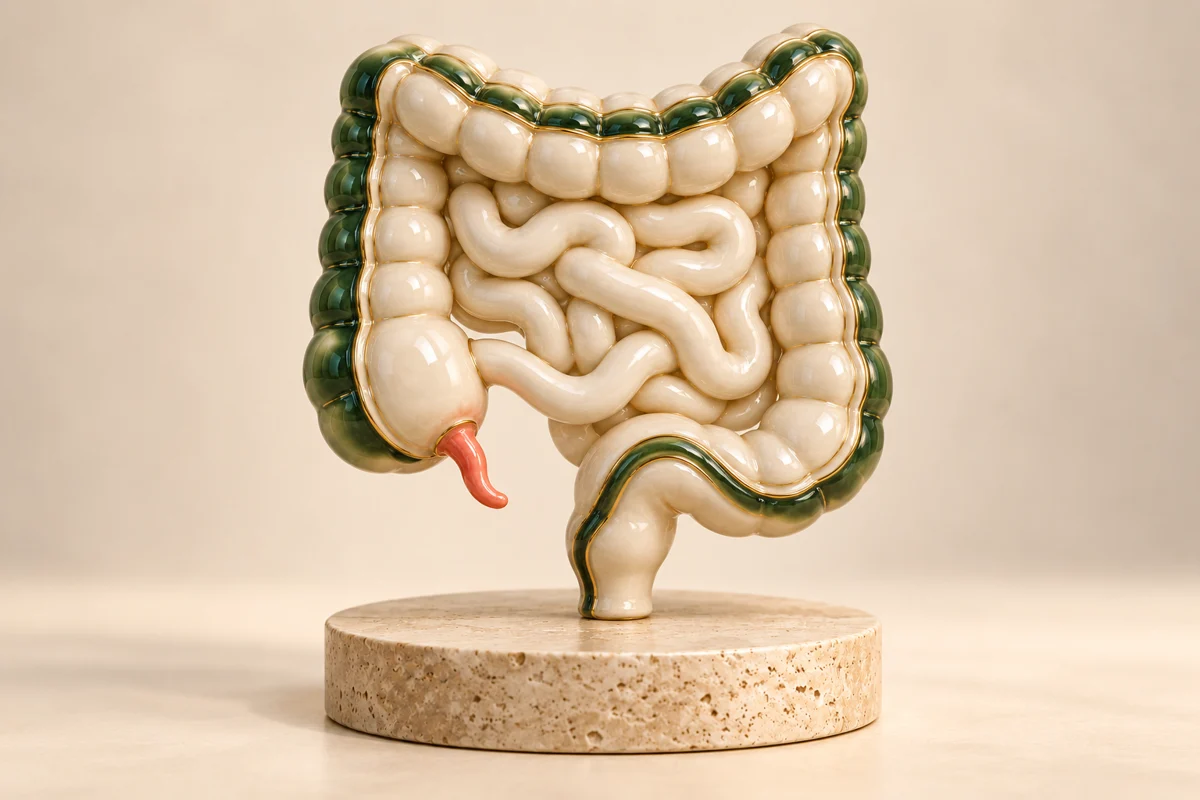
Appendicitis and appendectomy
AI-created conceptual artwork; not a patient result or an exact surgical diagram.
What is appendicitis?
- The appendix is a narrow blind-ended pouch attached to the cecum, the beginning of the large bowel, usually in the lower right abdomen. Inflammation may follow blockage by hardened stool or swollen lymphoid tissue.
- Untreated inflammation can lead to perforation, an abscess, peritonitis or sepsis. Removing the appendix usually causes no lasting digestive problem.
Symptoms and atypical presentations
- Pain may start near the navel, move to the lower right and worsen with movement or coughing. Loss of appetite, nausea, vomiting, fever, diarrhoea or constipation may occur.
- Children, older adults and pregnant patients may have less typical pain. Absence of fever or classic symptoms does not exclude appendicitis.
Diagnosis
- Assessment combines history, examination, blood and urine tests, and a pregnancy test when relevant. Kidney stones, urinary infection, bowel disease, ovarian conditions and ectopic pregnancy can resemble it.
- Ultrasound, CT or MRI is selected for the patient. Ultrasound is commonly first in children and pregnancy. No single test always settles the diagnosis; repeat hospital assessment may be needed.
Treatment and surgery
- Hospital care may include intravenous fluids, pain relief and antibiotics. Appendectomy under general anaesthesia, usually through small laparoscopic incisions, is a common treatment. Open surgery or conversion is sometimes needed.
- Perforation with widespread infection requires urgent infection control. A localised abscess may be treated with antibiotics, sometimes drainage, and an individual plan for surgery or follow-up.
Can antibiotics alone work?
- Selected patients with imaging-confirmed uncomplicated appendicitis may choose antibiotics after discussing suitability, follow-up and preferences with the surgical team.
- Treatment can fail or appendicitis can recur, requiring surgery. An appendicolith can increase failure risk. Do not self-prescribe antibiotics.
Preparation and possible risks
- Tell the team about medicines, blood thinners, allergies, illnesses and possible pregnancy. Ask about food and drink; do not delay assessment to become fasted.
- Risks include wound infection, abscess, bleeding, injury to nearby organs, anaesthetic complications and rarely adhesive bowel obstruction. Perforation can increase risks and hospital stay.
Food and home care
- Restart fluids and food as tolerated when the team permits. A permanent special diet is usually unnecessary; hydration and balanced meals help. Do not dismiss worsening pain, swelling or vomiting as a food issue.
- Take prescribed medicines as directed, follow discharge wound-care instructions and start short regular walks.
Activity and follow-up
- Light activities often resume within one to two weeks after uncomplicated surgery; heavy work, open surgery or perforation may need longer. Ask your surgeon about lifting and driving.
- Check the pathology result and follow-up plan. After nonoperative treatment, especially an abscess, imaging, bowel assessment or later surgery may be advised according to age and findings.
Warning signs after treatment
- Fever, increasing pain, persistent vomiting, inability to drink, abdominal distension, pus or spreading wound redness need prompt medical review.
- Breathlessness, chest pain, fainting or severe abdominal pain need emergency care. Recurrent pain after antibiotics also needs urgent assessment.
Sources
Was this guide helpful?
Your feedback helps us improve this guide.