In this guide
Gastric bypass
The video contains English captions.
Understanding this topic
Roux-en-Y gastric bypass
Gastric bypass creates a small stomach pouch and connects it to a lower part of the small intestine. It reduces food capacity and changes gut hormone and nutrient absorption patterns. It often improves reflux and has strong metabolic effects, but requires careful lifelong vitamin and mineral follow-up. Smoking and regular NSAID use can increase ulcer risk.
NIDDK / ASMBSMedical assessment and preparation
- Report all conditions, previous operations, allergies, medicines and supplements, especially diabetes, hypertension, heart or lung disease, sleep apnoea, blood clots and weight-loss medicines.
- Complete requested blood tests, anaemia and nutrient assessment, ultrasound, endoscopy, ECG and specialist reviews. Correct iron, B12, folate, vitamin D and other deficiencies when advised before surgery.
- Report H. pylori, ulcers, gastrointestinal bleeding, swallowing difficulty or long-term anti-inflammatory medicine use.
- Never stop anticoagulants, diabetes, blood-pressure, GLP-1 or hormonal medicines on your own; the clinical team must make the plan.
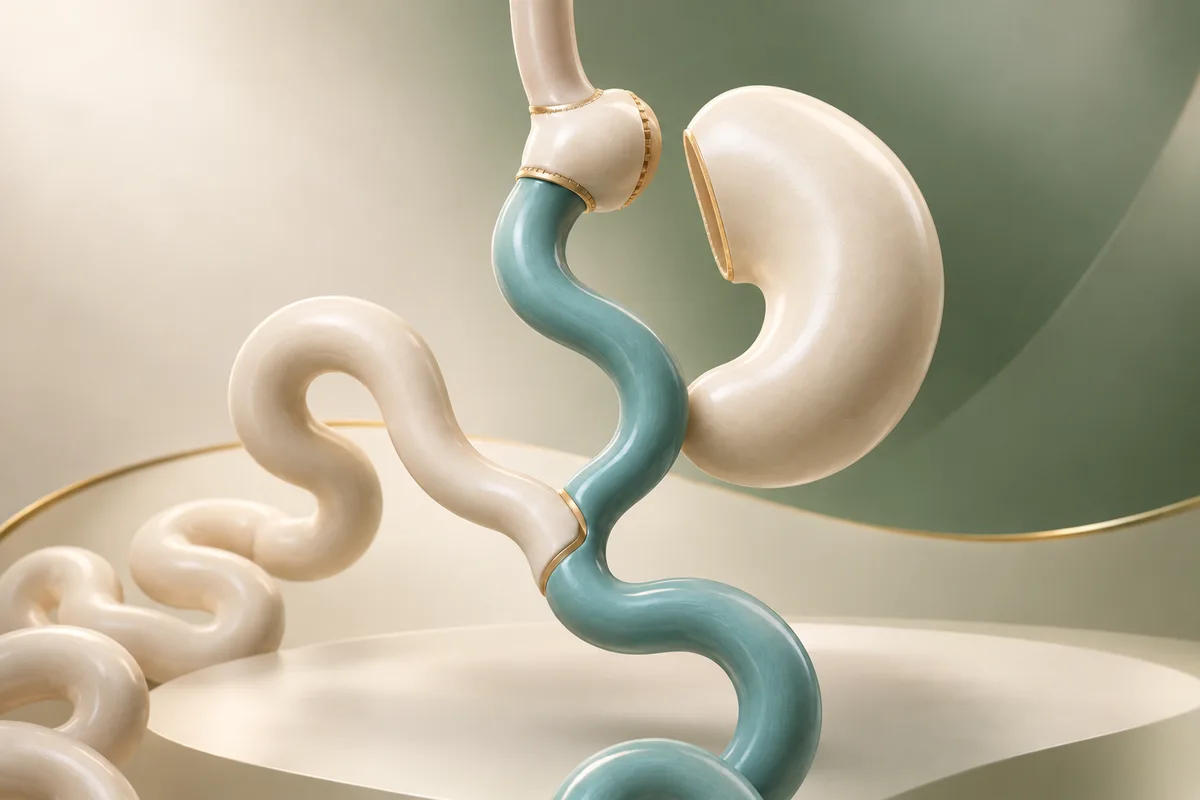
Gastric bypass concept
AI-created conceptual artwork; not a patient result or an exact surgical diagram.
Explore the educational diagram and sources
Educational illustration
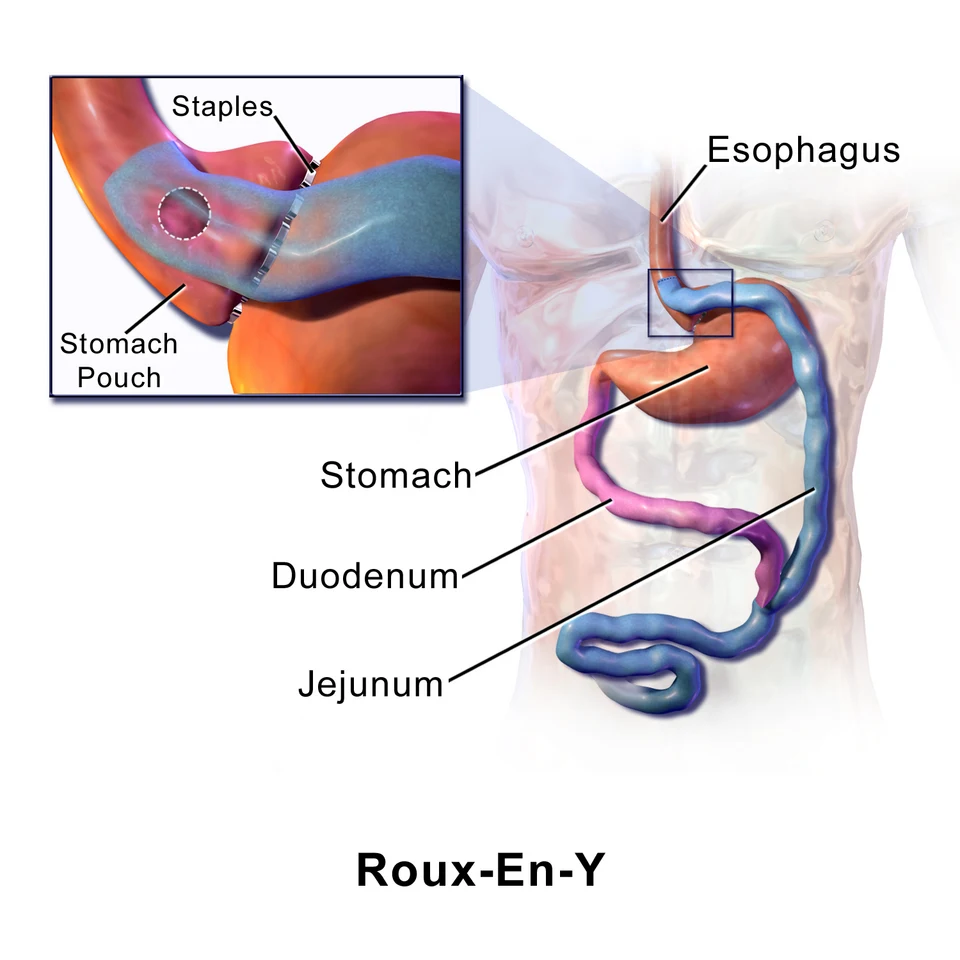
Roux-en-Y gastric bypass: a small stomach pouch connects to a rerouted segment of small intestine.
An educational schematic, not a patient result or a personalized treatment plan. Original labels may be in another language.
Open larger image ↗Source & licence
Blausen.com staff (2014), Medical gallery of Blausen Medical 2014, WikiJournal of Medicine 1(2), doi:10.15347/wjm/2014.010
Blausen 0776 Roux-En-Y 01.png · CC BY 3.0
Simplified educational image; not to scale.
Before and on the day of surgery
- Stop smoking, vaping and all nicotine according to the surgeon's plan, and disclose alcohol or substance use.
- Follow the hospital and anaesthetist's exact fasting instructions and take only medicines approved for that morning.
- Bring your medical documents, medicine list, inhalers and CPAP if used.
- Arrange an adult escort for discharge and do not drive yourself.
The first days after surgery
- Walk and perform deep-breathing exercises as soon as the team permits, and avoid prolonged inactivity.
- Begin liquids in tiny, slow sips while sitting. Avoid straws, carbonated drinks and rapid drinking.
- Mild abdominal discomfort, bloating, nausea, sore throat or shoulder pain may occur temporarily; increasing pain is not normal.
- Care for wounds and any drain exactly as instructed and record drain amount and colour.
- Confirm flight timing and clot-prevention measures before long-distance travel.
Diet stages and hydration
- Progress from clear liquids to full liquids, purées, soft foods and solid food only on the dietitian's schedule; do not advance early.
- Sip fluids throughout the day and follow the team's daily target; dark or reduced urine can indicate dehydration.
- Prioritise protein, take tiny bites, chew thoroughly and stop at the first feeling of fullness.
- Do not drink with meals and follow the advised interval before and after food.
- Avoid carbonated drinks, alcohol and high-sugar or high-fat foods, which can trigger dumping with palpitations, sweating, cramps or diarrhoea.
Medicines and lifelong supplements
- Take stomach protection, anticoagulation, pain relief and other discharge medicines exactly as prescribed.
- A bariatric multivitamin, vitamin B12, iron, calcium, vitamin D and any other prescribed supplements are usually needed for life; doses are adjusted using blood tests.
- Calcium and iron are generally separated. Modified-release, coated or large tablets may need review; never crush medicine without approval.
- Ibuprofen, naproxen, diclofenac and other NSAIDs can increase anastomotic ulcer and bleeding risk; use them only with bariatric-team approval.
- Diabetes and blood-pressure medicines may need rapid reduction; record readings and follow the discharge plan.
Explore the educational diagram and sources
Educational illustration
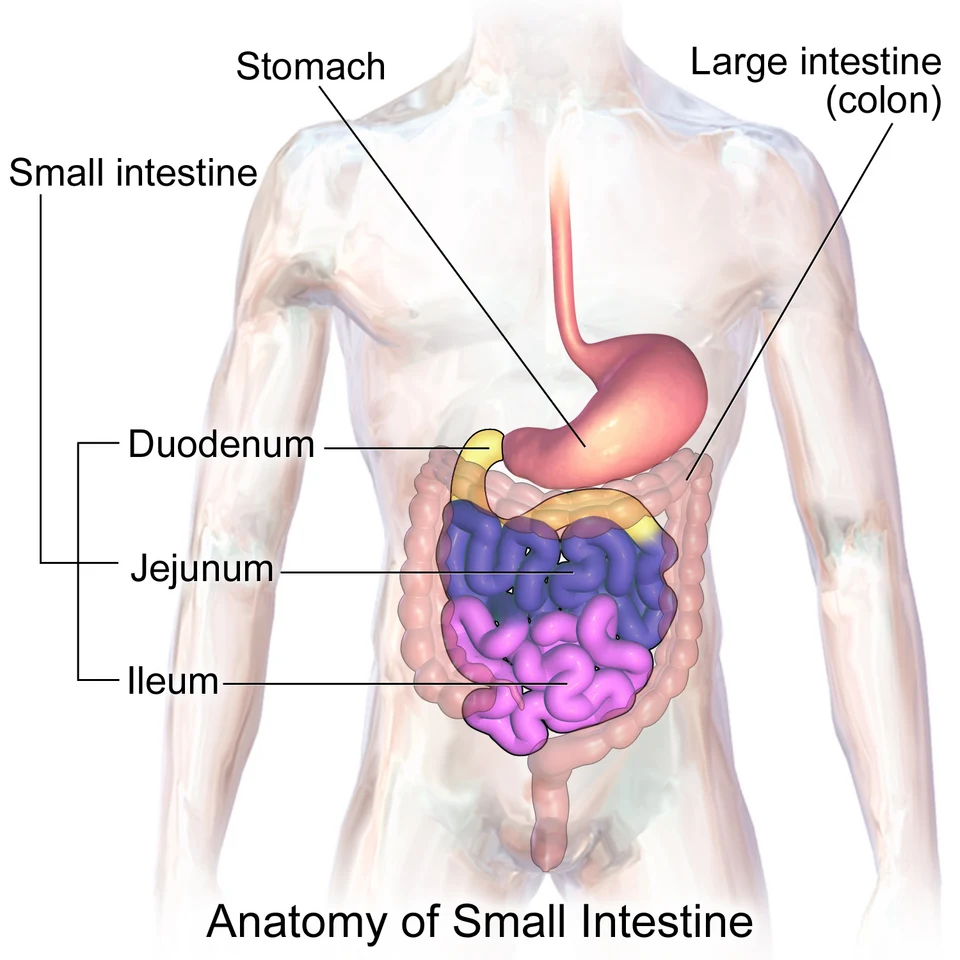
Duodenum, jejunum and ileum: the three parts of the small intestine.
An educational schematic, not a patient result or a personalized treatment plan. Original labels may be in another language.
Open larger image ↗Source & licence
Blausen.com staff (2014), Medical gallery of Blausen Medical 2014, WikiJournal of Medicine 1(2), doi:10.15347/wjm/2014.010
Blausen 0817 SmallIntestine Anatomy.png · CC BY 3.0
Simplified educational image; not to scale.
Wounds, activity and daily life
- Keep wounds clean and dry and follow individual instructions for showering, dressings and drain removal.
- Increase light walking daily but avoid heavy lifting, straining and strenuous exercise until approved.
- Do not drive while taking sedating pain medicine or until you can perform an emergency stop without pain.
- Fatigue is common during the first weeks; return to work depends on your job and recovery.
Long-term follow-up
- Surgical and dietetic follow-up, weight and symptom tracking, and lifelong blood tests for anaemia and nutrient deficiencies are essential.
- Do not stop supplements because you feel well or one test is normal unless the team directs you.
- Alcohol is absorbed faster and has a stronger effect after bypass; avoid it or follow specific medical advice.
- Avoid pregnancy during rapid weight loss, commonly for at least 12–18 months, and obtain bariatric and obstetric advice before trying.
- New or recurrent abdominal pain months or years later needs assessment for internal hernia or obstruction.
Urgent warning signs
- Persistent fast pulse, fever, increasing abdominal or chest pain, unusual shoulder pain or shortness of breath.
- Repeated vomiting, inability to drink, persistent food obstruction, markedly reduced urine, dizziness or severe weakness.
- Blood in vomit, black or bloody stool, abnormal bleeding, a swollen abdomen or severe cramping abdominal pain.
- One-sided calf pain or swelling, coughing blood, fainting or difficulty breathing.
- Spreading wound redness, foul drainage, wound opening or any sudden worrying change; do not wait for the next appointment.
Sources
Was this guide helpful?
Your feedback helps us improve this guide.