In this guide
Bile duct stones and ERCP
The video contains English captions.
The gallbladder and digestion
The video contains English captions.
Understanding this topic
Gallstones
Gallstones are hard material that forms in the gallbladder. Many are silent and need no treatment, but stones that block a duct can cause right-upper-abdominal pain, nausea or complications. Symptomatic gallstones are commonly treated with cholecystectomy. Fever, jaundice or persistent severe pain require prompt medical assessment. Very rapid weight loss can increase gallstone risk.
NIDDKMedical assessment and preparation
- Share all medical conditions, allergies, previous operations, medicines and supplements, especially diabetes, heart or lung disease and a history of blood clots.
- Report fever, severe or persistent right-upper abdominal pain, vomiting, yellow eyes or skin, dark urine, or previous pancreatitis before surgery.
- Complete blood tests, liver and bile-duct assessment, ultrasound and any additional imaging or consultation requested by your doctor.
- Tell the team about aspirin, warfarin, clopidogrel, diabetes medicines, weight-loss medicines and other important drugs; never stop or start medicine on your own.
- Stop smoking, vaping and nicotine according to the surgeon's plan and arrange an adult escort home.
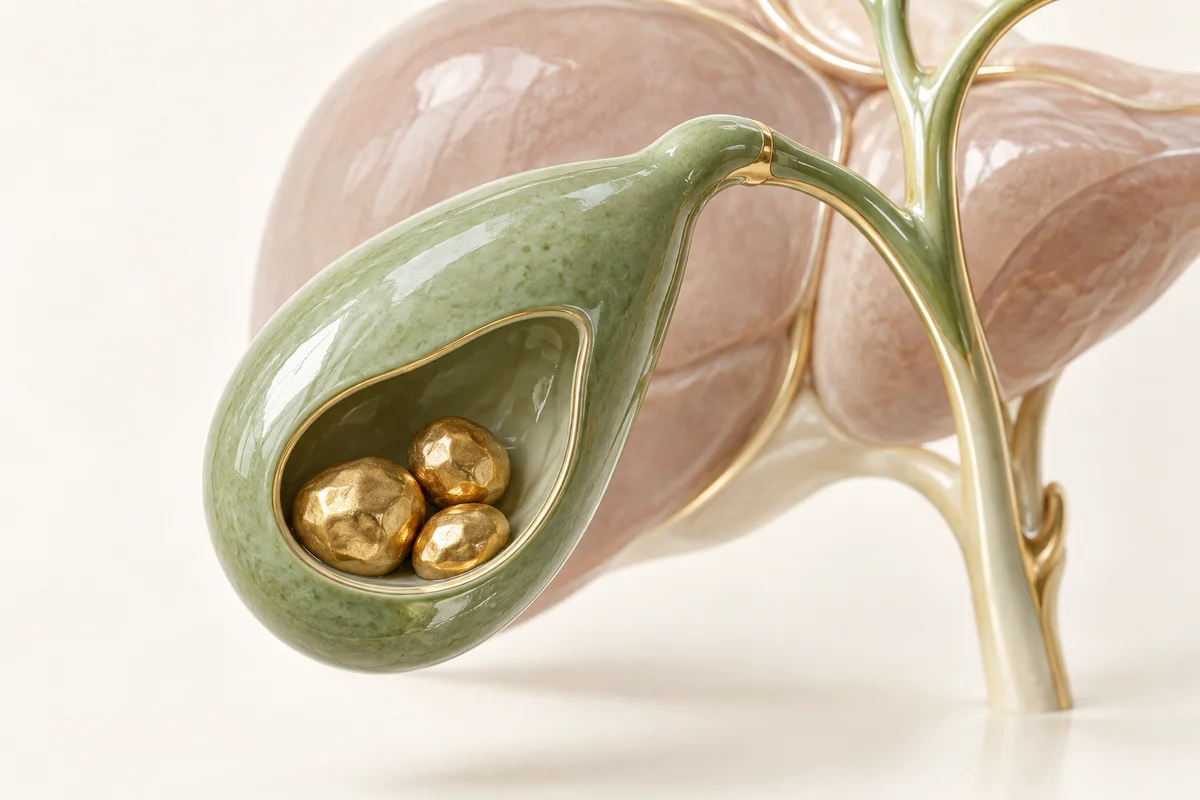
Gallbladder and gallstones
AI-created conceptual artwork; not a patient result or an exact surgical diagram.
Explore the educational diagram and sources
Educational illustration
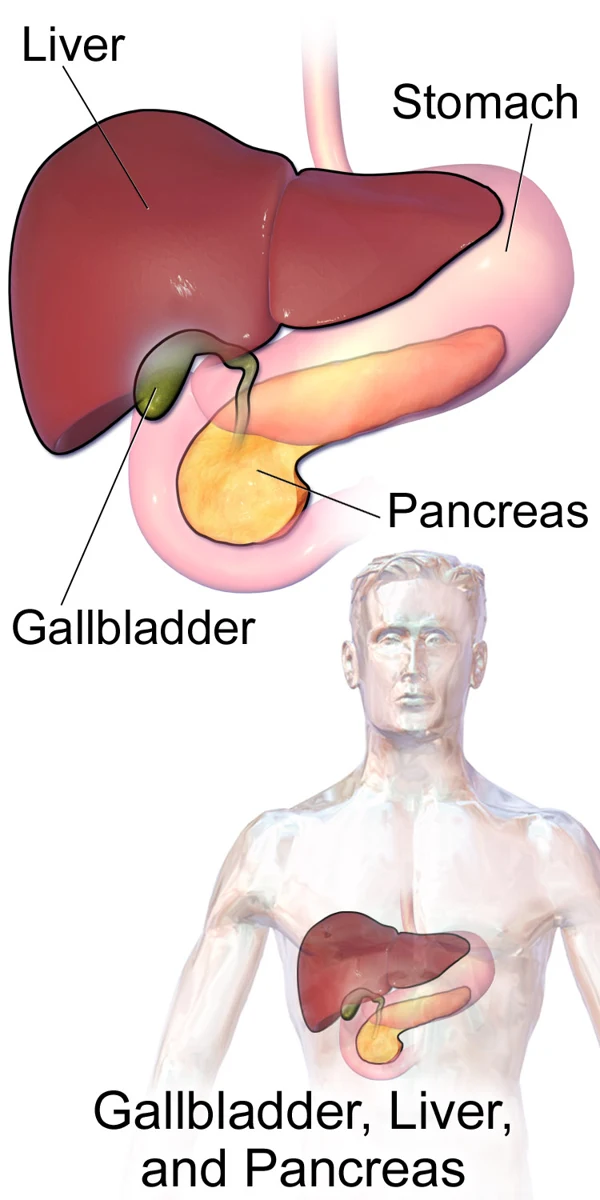
The gallbladder, liver and pancreas in relation to the stomach.
An educational schematic, not a patient result or a personalized treatment plan. Original labels may be in another language.
Open larger image ↗Source & licence
Blausen.com staff (2014), Medical gallery of Blausen Medical 2014, WikiJournal of Medicine 1(2), doi:10.15347/wjm/2014.010
Blausen 0428 Gallbladder-Liver-Pancreas Location.png · CC BY 3.0
Simplified educational image; not to scale.
The night before and surgery day
- Follow the exact fasting and clear-fluid instructions and take only medicines approved by the surgeon and anaesthetist that morning.
- Shower and wear comfortable clothing; leave jewellery, nail polish, contact lenses and valuables at home.
- Bring your medicine list, medical documents, test results and imaging.
- Do not drive after anaesthesia; arrange for an adult to take you home and preferably remain with you for the first 24 hours.
The first hours and days
- Mild to moderate abdominal pain, bloating, nausea, sore throat and shoulder pain from laparoscopic gas may occur and usually improve over several days.
- Begin assisted walking and deep-breathing exercises as advised, and avoid remaining still for long periods.
- Take pain, nausea, antibiotic and other medicines only as prescribed.
- If you have a drain, record the amount and colour of the fluid and follow the specific care and removal plan.
Diet and bowel function
- Restart fluids and food as tolerated and instructed; small, light meals are often easier during the first few days.
- Temporarily limit very fatty, fried or spicy foods, then gradually return to a normal healthy diet.
- Drink enough water and use fibre, activity or prescribed medicine to prevent constipation.
- Loose stools or bloating may be temporary; contact the team if they are severe, persistent or cause dehydration.
Explore the educational diagram and sources
Educational illustration
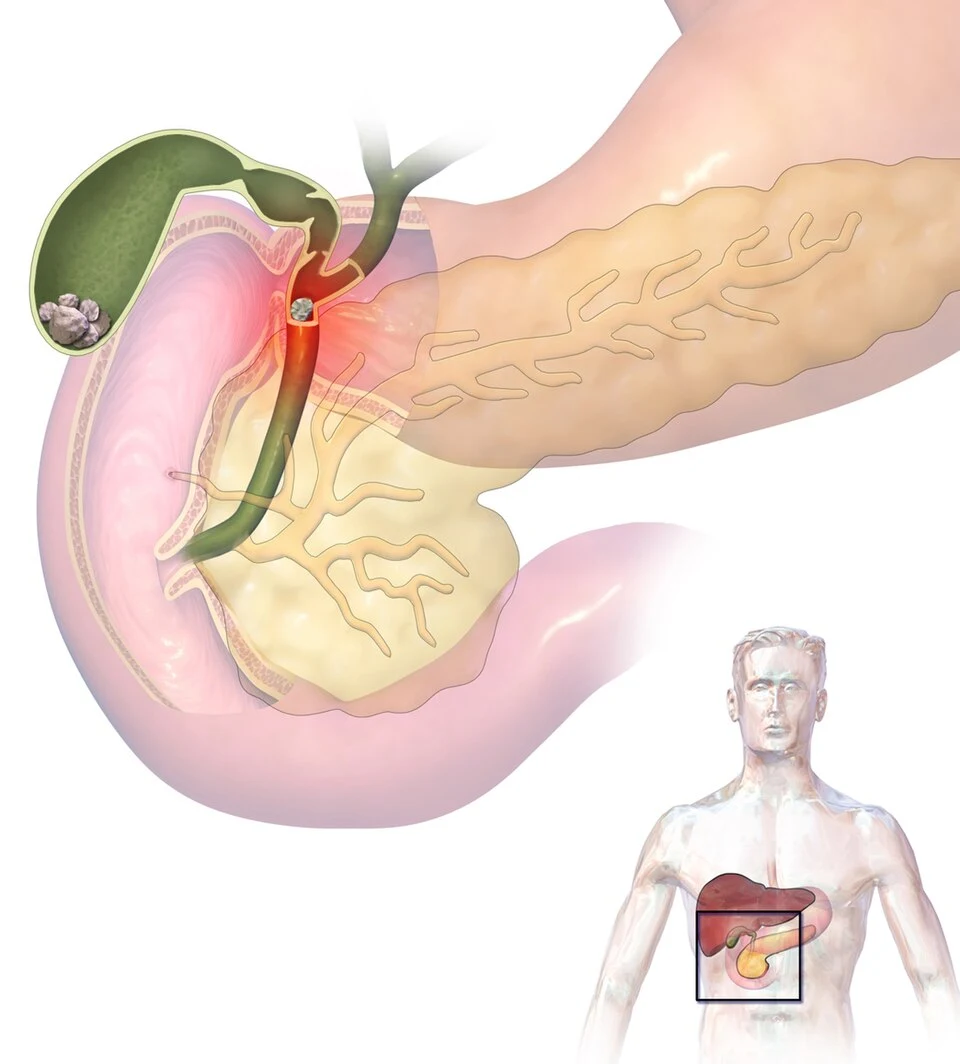
Gallstones and a blocked bile duct with ascending cholangitis are illustrated; not every gallstone causes this complication.
An educational schematic, not a patient result or a personalized treatment plan. Original labels may be in another language.
Open larger image ↗Source & licence
BruceBlaus
Gallstones and Ascending Cholangitis.jpg · CC BY-SA 4.0
Simplified educational image; not to scale.
Wound care, activity and driving
- Keep wounds and dressings clean and dry as directed, and do not pick at skin glue or wound strips.
- Shower timing depends on the dressing; avoid baths, pools, sea swimming, saunas and hot tubs until approved.
- Increase light walking, but avoid strenuous exercise, straining and heavy lifting for the period set by your surgeon; restrictions are longer after open surgery.
- Do not drive while taking sedating pain medicine or until you can perform an emergency stop without pain.
Return to normal life and follow-up
- After laparoscopy many patients go home the same day or the following day; open or complicated surgery follows a different plan.
- Return to light work is often possible within one to two weeks, depending on the operation, your work and recovery.
- Follow-up is commonly arranged within one to two weeks, when the gallbladder pathology result can also be reviewed.
- Your surgeon's individual instructions about medicines, diet, dressings, drains and activity take priority over this general guide.
Urgent warning signs
- Fever above 38°C, chills, severe or increasing abdominal pain, a swollen abdomen or persistent vomiting.
- Yellow eyes or skin, dark urine, very pale stools or persistent right-upper abdominal pain.
- Continuing bleeding, spreading redness, warmth, swelling, bad smell or pus from a wound.
- Shortness of breath, chest pain, coughing blood, severe weakness, or one-sided calf pain and swelling.
- Inability to eat or drink, markedly reduced urine or any sudden worrying symptom; do not wait for the next appointment.
Sources
Was this guide helpful?
Your feedback helps us improve this guide.