In this guide
Acid reflux and LINX
The video contains English captions.
How acid reflux happens
The video contains English captions.
Sleep position and acid reflux
The video contains English captions.
Understanding this topic
GERD / acid reflux
GERD occurs when stomach contents repeatedly flow back into the esophagus and cause troublesome symptoms or injury. Lifestyle measures, acid-suppressing medicines and sometimes procedures or surgery are used depending on severity. Difficulty swallowing, bleeding, unexplained weight loss or persistent symptoms need medical evaluation.
NIDDKWhat reflux is and why it happens
- Reflux is the return of stomach contents into the esophagus. When it causes troublesome recurrent symptoms or complications, it is called GERD. It is not simply “too much acid”: the lower esophageal barrier, a hiatal hernia and abdominal pressure also matter.
- Excess weight, pregnancy, smoking, large meals and lying down after eating can contribute. Some medicines aggravate symptoms; review them with your clinician rather than stopping them yourself.
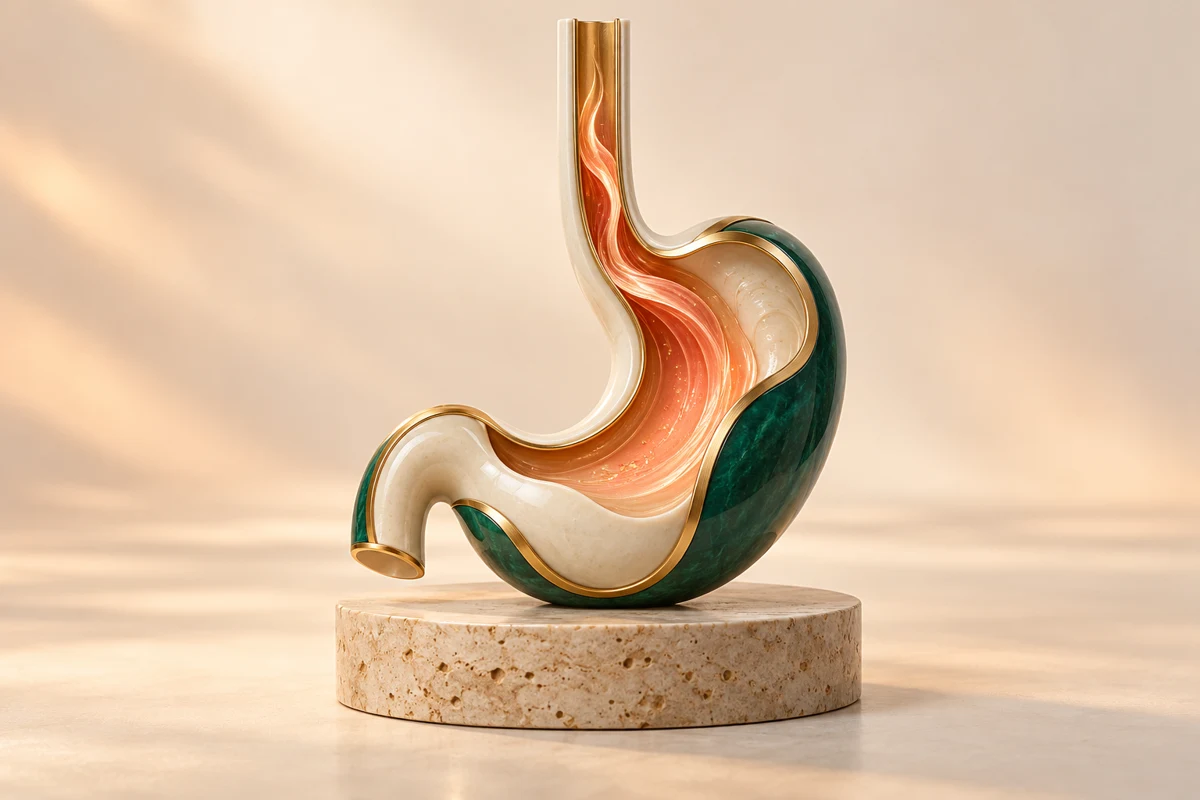
Acid reflux and GERD
AI-created conceptual artwork; not a patient result or an exact surgical diagram.
Explore the educational diagram and sources
Educational illustration
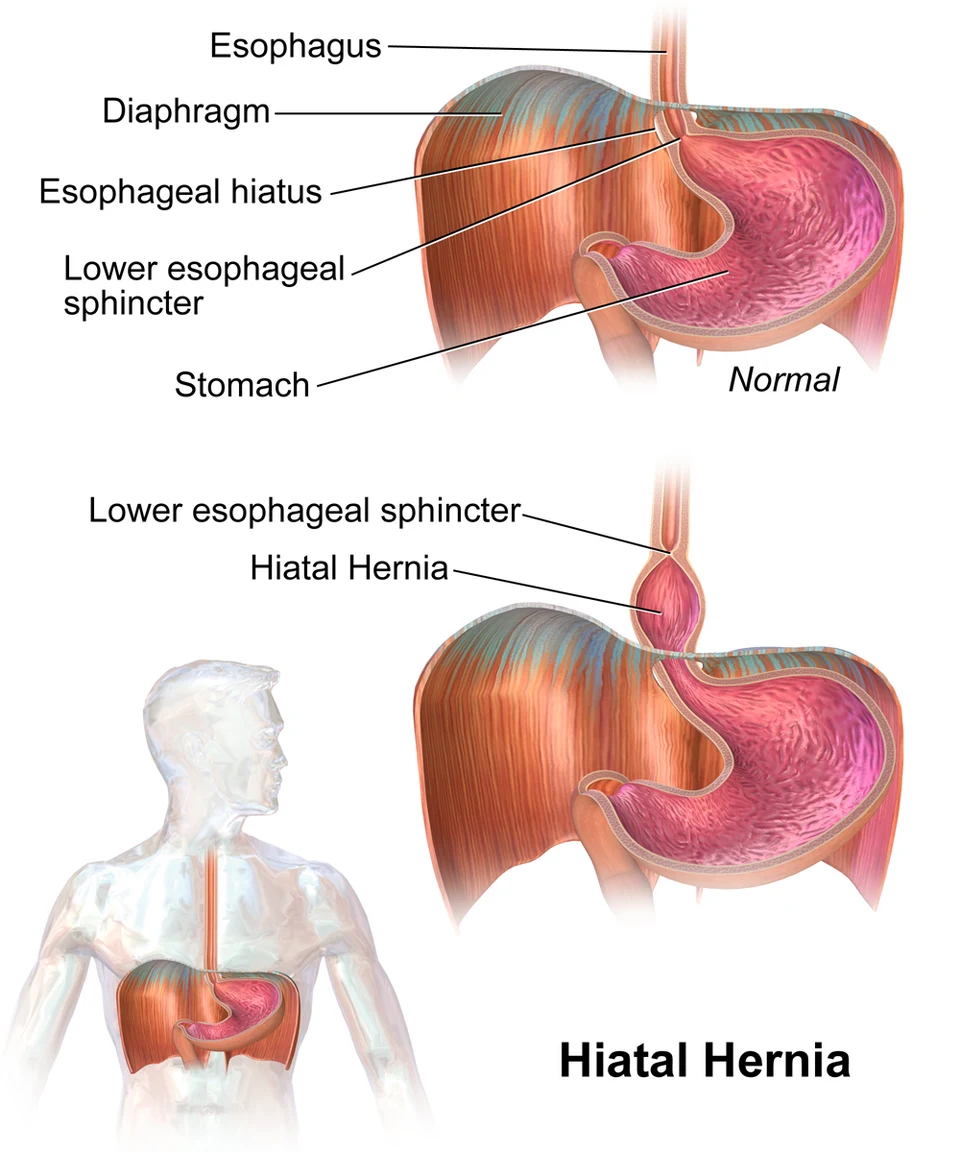
Normal position compared with a hiatal hernia, where part of the stomach moves above the diaphragm.
An educational schematic, not a patient result or a personalized treatment plan. Original labels may be in another language.
Open larger image ↗Source & licence
BruceBlaus
Hiatal Hernia.png · CC BY-SA 4.0
Simplified educational image; not to scale.
Typical and less specific symptoms
- Heartburn behind the breastbone and sour or bitter regurgitation, especially after meals or at night, are common. Belching and upper abdominal discomfort may coexist.
- Cough, hoarseness, a lump sensation in the throat and dental erosion can have other causes. These symptoms alone do not prove reflux and do not always improve with acid suppression.
When to seek urgent help
- Do not assume new or severe chest pain is reflux, especially with breathlessness, sweating, weakness or pain spreading to the arm or jaw. Call local emergency services (112 in Türkiye and the EU).
- Vomiting blood, black tarry stools, fainting or food stuck with inability to swallow saliva need urgent assessment. Difficulty or pain swallowing, unexplained weight loss, anemia and persistent vomiting also need prompt medical review.
How GERD is diagnosed
- For typical symptoms without warning signs, a clinician may offer a short trial of a proton pump inhibitor. Improvement is useful information but is not conclusive proof.
- Endoscopy is used for warning signs, an inadequate response or assessment of complications and Barrett’s risk. A normal endoscopy does not exclude reflux. Acid monitoring or impedance–pH testing can clarify uncertain cases and relate reflux episodes to symptoms.
- Manometry assesses esophageal movement and is important before some procedures; it is not a standalone GERD test. Helicobacter testing does not diagnose GERD either. Stop medication before testing only if the testing team instructs you to.
Foods that may worsen symptoms
- Fatty or fried foods, large meals, coffee and caffeinated drinks, chocolate, mint, alcohol, spicy foods, tomatoes and citrus trigger symptoms in some people. Carbonated drinks may also cause discomfort.
- Not everyone reacts to all of these. Keep a diary of meals, portions, sleep and symptoms, then limit your own reproducible triggers. Broad food-group exclusion can compromise nutrition.
What and how to eat
- Try smaller portions, eat slowly and avoid overeating. According to tolerance, include vegetables, whole grains, oats, lean protein and less acidic fruits in a balanced diet.
- No single food cures GERD. Vinegar, lemon juice and repeated baking-soda use are not reliable universal treatments and may cause harm. After bariatric surgery, your team’s specific eating plan takes priority over general advice.
Habits that reduce reflux
- Finish your last meal at least three hours before bed and avoid lying down after eating. For night symptoms, raise the upper body using a wedge or elevate the head of the bed about 15–20 cm; stacking pillows under the head alone is often insufficient. Left-side sleeping may help.
- If overweight, gradual appropriate weight loss, stopping smoking and avoiding tight waist clothing may help. Avoid bending or strenuous exercise immediately after a large meal, while maintaining regular activity.
Medicines and correct use
- Antacids and alginates can provide short relief for occasional symptoms. H2 blockers and proton pump inhibitors (PPIs) reduce acid; PPIs are more effective for healing acid-related esophagitis.
- Many PPIs work best 30–60 minutes before a meal; follow the specific product and prescription. Your clinician selects the drug, dose and duration. Once controlled, review continued need and the lowest effective dose; some people require long-term treatment.
- During pregnancy or breastfeeding, in children, with kidney disease or multiple medicines, ask a clinician or pharmacist before choosing treatment. Do not independently increase, combine or stop medicines.
If treatment does not help
- Review timing, adherence and triggers. Other explanations include motility disorders, eosinophilic esophagitis, reflux hypersensitivity or functional heartburn.
- Persistent symptoms do not automatically mean surgery or indefinite dose increases. Targeted assessment with a gastroenterologist helps establish whether reflux is actually responsible.
Surgery and endoscopic treatment
- In selected patients with proven GERD, a hiatal hernia or persistent symptoms, hernia repair and fundoplication may be considered. Magnetic sphincter augmentation or procedures such as TIF require suitable anatomy, careful selection and an experienced service.
- Assessment generally includes endoscopy, esophageal function tests and reflux monitoring when needed. Possible drawbacks include swallowing difficulty, gas bloating, difficulty belching or vomiting, and recurrence. Permanent relief or stopping medication is not guaranteed.
Reflux and bariatric surgery
- Sleeve gastrectomy may worsen existing reflux or cause new reflux. Discuss heartburn, previous endoscopy and hernia findings before choosing an operation.
- For selected people with obesity and confirmed GERD, Roux-en-Y bypass or conversion from sleeve may be considered. This is not suitable for everyone and carries surgical risks and ongoing supplement and follow-up needs. Report new postoperative symptoms to your surgical team.
Complications and follow-up
- Uncontrolled GERD can cause inflammation, ulcers or narrowing of the esophagus. Barrett’s esophagus occurs in a subset of patients; reflux does not mean cancer. Screening and surveillance decisions depend on individual risk and specialist assessment.
- Bring symptom duration and timing, swallowing problems, weight changes, triggers, medications and previous reports to your appointment. This is general education, not a personal diagnosis or prescription.
Sources
Was this guide helpful?
Your feedback helps us improve this guide.