In this guide
Hemorrhoids
The video contains English captions.
Understanding this topic
Hemorrhoids
Hemorrhoids are swollen veins around the anus or in the lower rectum. Common symptoms include bleeding, prolapse, itching or discomfort. Fiber, adequate fluids, avoiding straining and better toilet habits help many cases. Depending on grade and symptoms, office procedures or surgery may be needed. Rectal bleeding should not automatically be assumed to be hemorrhoids.
NIDDKHaemorrhoids and different treatments
- Rectal bleeding is not always haemorrhoids. Bowel investigation may be needed according to age, history and symptoms. Report unexplained weight loss, changes in bowel habit or anaemia.
- Banding, energy-based treatments and surgical excision differ in pain and aftercare. Know your technique; “laser” does not guarantee no pain, complications or recurrence.
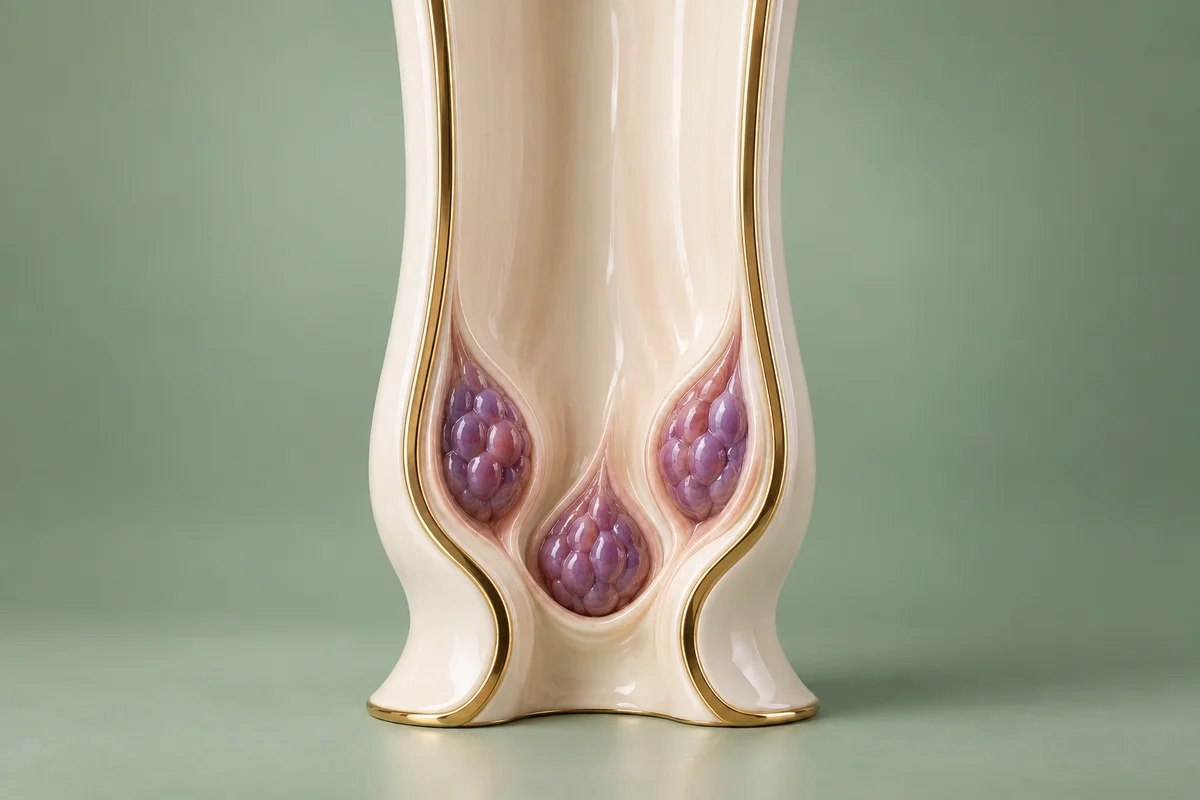
Hemorrhoids: swollen vascular cushions
AI-created conceptual artwork; not a patient result or an exact surgical diagram.
Explore the educational diagram and sources
Educational illustration
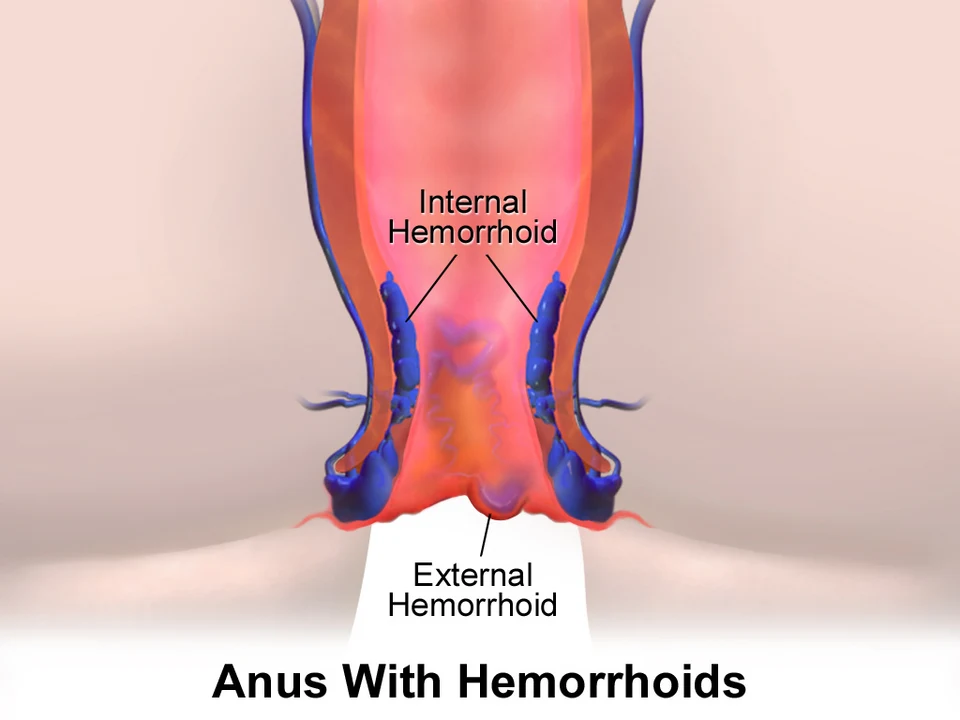
Internal and external hemorrhoids occupy different positions around the anal canal.
An educational schematic, not a patient result or a personalized treatment plan. Original labels may be in another language.
Open larger image ↗Source & licence
Blausen.com staff (2014), Medical gallery of Blausen Medical 2014, WikiJournal of Medicine 1(2), doi:10.15347/wjm/2014.010
Blausen 0408 Hemorrhoids.png · CC BY 3.0
Simplified educational image; not to scale.
Preparing for surgery
- This is general guidance. Your procedure, medical conditions and discharge instructions take priority. Ask about the exact technique and its specific risks before consenting.
- Disclose medicines, supplements, allergies, previous clots or bleeding, diabetes, sleep apnoea, previous surgery and possible pregnancy. Do not stop blood thinners, diabetes medicines, weight-loss injections or psychiatric medicines yourself; obtain a medication and fasting plan from your team.
- Tests and cardiac or anaesthetic assessment depend on your condition, not a standard package for everyone. Anaemia, infection, malnutrition and poorly controlled glucose should be assessed and corrected when needed. Plan to stop smoking and other nicotine products several weeks beforehand with professional support.
- Continue balanced meals, adequate protein and hydration unless you have heart or kidney restrictions. Use a special diet, bowel preparation or a light final meal only when written for your operation; obtain exact solid-food and fluid cut-off times from the anaesthesia team rather than guessing.
- Arrange an adult escort after sedation or anaesthesia and help at home. Do not drive until drug effects have worn off and the team permits it. Before booking travel, especially long flights, obtain clearance and a clot-prevention plan.
Comfortable bowel movements and hygiene
- Aim for soft, formed stools, not diarrhoea. Increase fibre gradually and drink enough within any heart or kidney restrictions. Use prescribed stool softeners or laxatives; persistent constipation and diarrhoea both need correction.
- Do not delay bowel movements, strain or sit on the toilet for long periods. Clean gently with lukewarm water after stools and pat dry. Avoid scented soap, irritating products and hot water.
- A brief sitz bath in plain lukewarm water may ease pain if your surgeon permits it. Do not insert suppositories, enemas, ointments or objects unless specifically instructed for your procedure.
Pain and bleeding afterwards
- After excision, pain during stools and limited spotting may occur for a while. Follow the painkiller and stool-softener plan; do not delay stools through fear of pain.
- After banding, bleeding can occur several days later when tissue separates. Heavy, persistent bleeding or clots are not normal.
- If packing was inserted, ask when and how it should be removed. Do not disturb the wound or use suppositories or enemas yourself.
Returning to work and reducing recurrence
- Recovery depends on method and work demands; full comfort after excision may take weeks. Increase activity gradually and avoid heavy strain until cleared.
- Continue fibre, medically appropriate fluids, movement and short toilet visits. Persistent bleeding, narrowing or difficulty passing stools needs assessment.
Haemorrhoid warning signs
- Significant bleeding or clots, dizziness, severe increasing pain with fever, or inability to urinate require immediate care. Especially after banding, do not wait with severe pain and fever.
Medicines, movement and follow-up
- Take painkillers and other medicines only as prescribed. Antibiotics or anticoagulant injections are not needed in the same way for everyone. Opioids can cause drowsiness and constipation; alcohol and driving while taking them are unsafe.
- Start short, frequent walks when permitted; prolonged bed rest is not appropriate. Return to work, exercise, sex and lifting depends on technique and healing. Obtain written restrictions.
- Before discharge, confirm dressings, showering, stitch or drain removal and your first review. Do not disturb wounds, adhesive, stitches or drains, or apply unprescribed creams or antiseptics to open wounds.
- Restart fluids and food according to the operation. If unrestricted, begin with small light portions, eat slowly and stop for nausea or pain; then add protein, vegetables and regular textures gradually. After stomach, bowel, anal or hiatal-hernia procedures, use the procedure-specific plan.
- Eat a balanced diet with adequate protein and fluids appropriate to your health conditions and prevent constipation with movement, fluids and prescribed treatment. Recovery and final results vary. Persistent or recurrent symptoms require assessment, not self-treatment.
General warning signs — urgent assessment
- Breathlessness, chest pain, coughing blood, fainting or one-sided calf pain and swelling require immediate assessment. Call local emergency services; in Türkiye, 112.
- Report heavy or ongoing bleeding, worsening pain not controlled by prescribed medicine, fever with feeling unwell, spreading redness or foul discharge, repeated vomiting, inability to drink or urinary retention immediately. Website messages do not replace emergency care.
Sources
Was this guide helpful?
Your feedback helps us improve this guide.