Guide available
In this guide
Understanding pancreatic cancer
The video contains English captions.
Inflammation, cysts and tumours
- The pancreas makes digestive enzymes and hormones such as insulin. Acute/chronic pancreatitis, cysts and cancers are different conditions. Gallstones, alcohol, high triglycerides and some medicines can cause inflammation. Not every cyst is cancer.
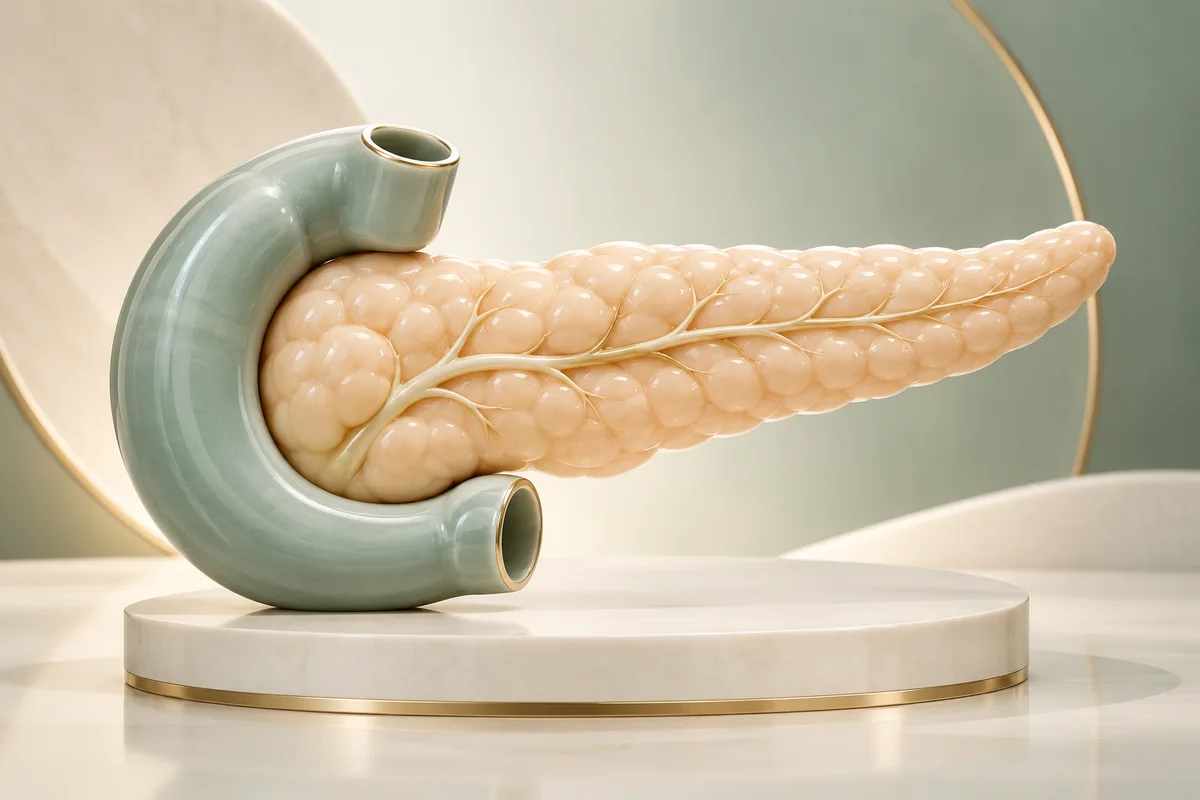
Pancreatic health concept
AI-created conceptual artwork; not a patient result or an exact surgical diagram.
Explore the educational diagram and sources
Educational illustration
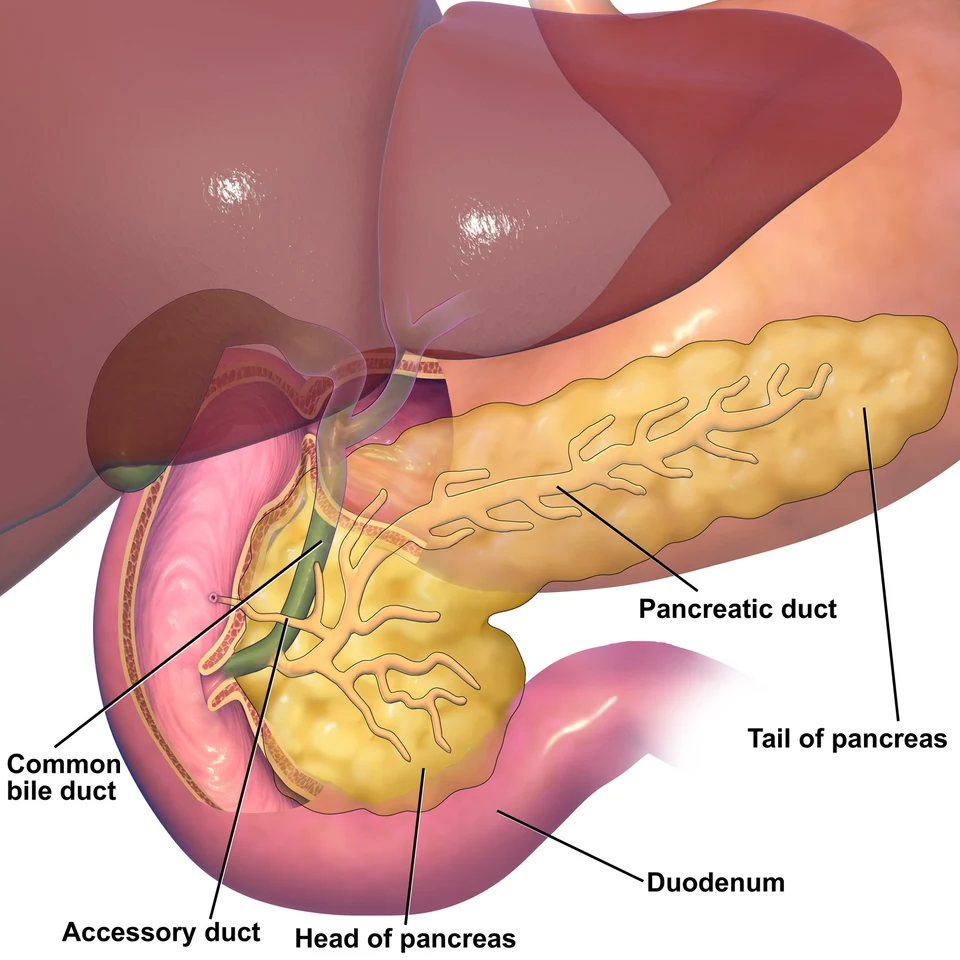
Pancreatic ducts and their relationship to the bile duct and duodenum.
An educational schematic, not a patient result or a personalized treatment plan. Original labels may be in another language.
Open larger image ↗Source & licence
Blausen.com staff (2014), Medical gallery of Blausen Medical 2014, WikiJournal of Medicine 1(2), doi:10.15347/wjm/2014.010
Blausen 0698 PancreasAnatomy.png · CC BY 3.0
Simplified educational image; not to scale.
Tests
- Blood tests, CT, MRI/MRCP or endoscopic ultrasound are chosen for a specific question. Some lesions need sampling. CA19-9 alone neither diagnoses cancer nor provides general-population screening. Cyst follow-up depends on size, structure, duct changes, growth and symptoms.
Treatment and surgery
- Acute pancreatitis may require hospital care; fluids, pain relief and nutrition are individualized. Do not self-treat with prolonged fasting or antibiotics. Enzyme insufficiency may need enzymes with food; diabetes also needs follow-up. Avoid alcohol and smoking.
- Cancer surgery depends on spread and vessel involvement. Whipple or distal resection treats different locations, sometimes with chemotherapy. After surgery monitor nutrition, weight, glucose and enzyme needs.
Warning signs
- Severe persistent upper abdominal pain radiating to the back, repeated vomiting or fever needs urgent assessment. New jaundice, pale stools, dark urine or unexplained weight loss needs prompt review; jaundice with fever or chills is an emergency.
Sources
Was this guide helpful?
Your feedback helps us improve this guide.