In this guide
Sleeve gastrectomy
The video contains English captions.
Understanding this topic
Sleeve gastrectomy
Sleeve gastrectomy removes most of the stomach and leaves a narrow tube-shaped stomach. It reduces stomach capacity and also changes appetite-related signals. It does not reroute the intestine. It is not reversible, and reflux can appear or worsen in some people. Long-term nutrition follow-up and supplements are still important.
NIDDK / ASMBSMedical preparation
- Share every diagnosis, previous operation, allergy, medicine and supplement — especially diabetes, blood-pressure, heart, thyroid, asthma, anticoagulant and weight-loss medicines.
- Complete the requested blood tests, ultrasound, endoscopy, ECG and specialist reviews. Bring inhalers and CPAP if used.
- Do not stop chronic medicines on your own. The clinical team must plan anticoagulants, diabetes/GLP-1 medicines and hormonal medicines.
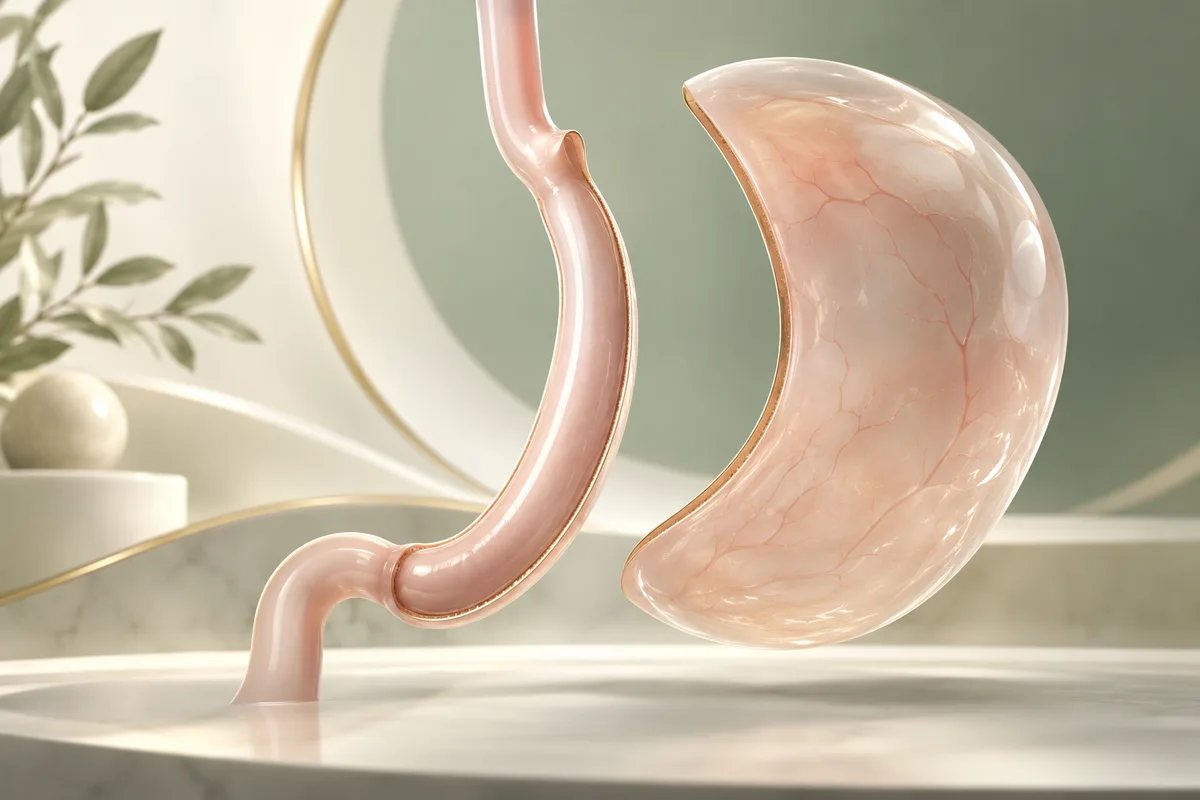
Sleeve gastrectomy concept
AI-created conceptual artwork; not a patient result or an exact surgical diagram.
Explore the educational diagram and sources
Educational illustration
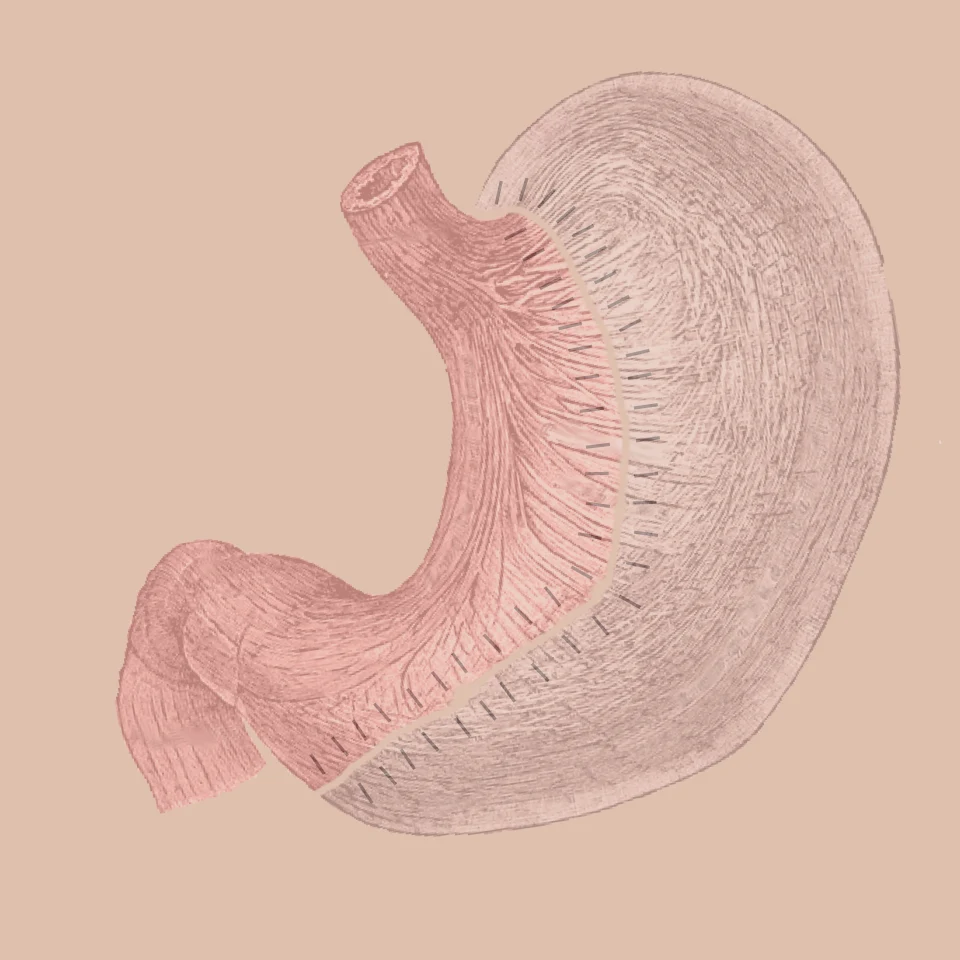
Sleeve gastrectomy changes the stomach into a narrow tube; this is a procedure schematic.
An educational schematic, not a patient result or a personalized treatment plan. Original labels may be in another language.
Open larger image ↗Source & licence
Kwipédl Cyop
Sleeve gastrectomy diagram (according IFSO and French HAS).svg · CC BY-SA 4.0
Simplified educational image; not to scale.
H. pylori and digestive conditions
- Complete prescribed H. pylori treatment before surgery planning is finalized.
- A test of cure is commonly performed at least 4 weeks after antibiotics and about 2 weeks after stopping acid-suppressing medicine, only with clinician approval.
- Report severe reflux, hiatal hernia, ulcers, bleeding or swallowing difficulty because these may change the operation plan.
Before and on the day of surgery
- Stop nicotine according to the surgeon's plan and disclose alcohol or substance use.
- If a liver-reduction diet is prescribed, follow the written clinic plan. Do not improvise prolonged fasting, juice cleanses or complete food avoidance.
- Stay hydrated and keep meals light and regular in the preceding days. The final meal and drink instructions are individual.
- Follow the hospital and anesthetist's exact fasting time; take only medicines specifically approved for that morning.
- Bring identification, reports, your medicine list, inhalers and CPAP if applicable.
Early recovery
- Walk and perform breathing exercises as soon as the team permits.
- Start liquids in tiny, slow sips while sitting; progress only as instructed.
- Keep wounds clean and dry and follow the discharge plan for showering and dressings.
- Confirm flight timing and clot-prevention measures before long-distance travel.
Explore the educational diagram and sources
Educational illustration
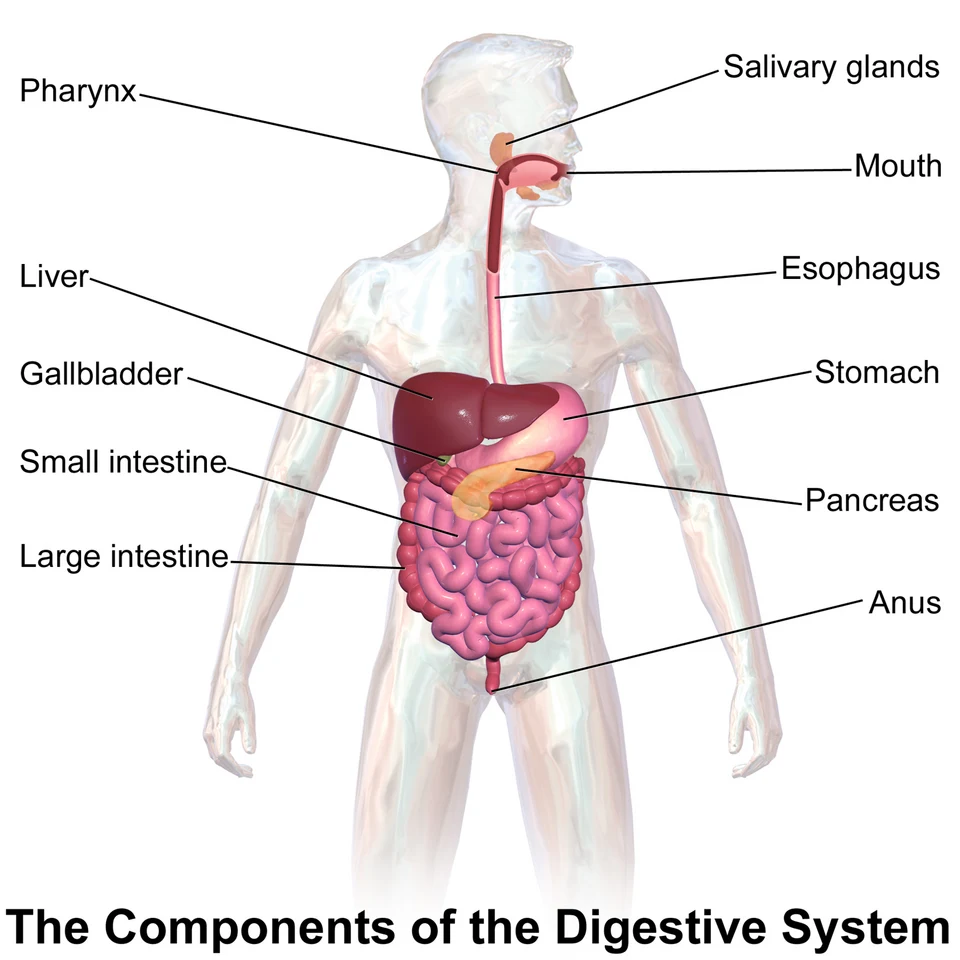
The digestive tract and associated organs: follow the route from the mouth to the intestine.
An educational schematic, not a patient result or a personalized treatment plan. Original labels may be in another language.
Open larger image ↗Source & licence
Blausen.com staff (2014), Medical gallery of Blausen Medical 2014, WikiJournal of Medicine 1(2), doi:10.15347/wjm/2014.010
Blausen 0316 DigestiveSystem.png · CC BY 3.0
Simplified educational image; not to scale.
Nutrition stages
- There is no universal calendar. Use the dates on your discharge plan and do not advance a stage just because a certain day has arrived. Stop and contact the team for pressure, pain, nausea or vomiting.
- Clear stage: sip still, sugar-free clear fluids slowly and repeatedly. Hydration is the first goal; do not gulp or use a straw unless your team allows it.
- Full-liquid stage: use suitable protein drinks, tolerated low-fat dairy alternatives and fully strained soups as directed; avoid lumps, high-fat and high-sugar products.
- Purée stage: food must be smooth and lump-free. Start with a soft protein source, followed by permitted puréed vegetables and fruit.
- Soft stage: introduce moist egg, fish, very tender chicken or other approved foods one at a time. Dry, tough, fried or doughy food and large bites may cause pain or obstruction.
- Long term: use small planned meals, protein first, tiny bites, thorough chewing and stop at the first fullness. Grazing and liquid calories can bypass restriction.
- Protein and fluid targets are individual. Many adults are guided toward roughly 60–80 g protein and 1.5–2 L fluid daily, but kidney, heart and other conditions can change this target.
- Keep drinks separate from meals by the interval written by your team. Avoid carbonated drinks, alcohol and high-sugar or high-fat foods.
Medicines and supplements
- Use stomach protection, anticoagulation, pain or bowel medicines only as written on the discharge prescription.
- Protein and vitamin/mineral supplements begin on the clinic schedule. Do not add anti-inflammatory or herbal products without approval.
Urgent warning signs
- Persistent fast heartbeat, fever, increasing abdominal or chest pain, unusual shoulder pain or shortness of breath.
- Repeated vomiting, inability to drink, very low urine output, blood in vomit or black stool.
- One-sided calf swelling or pain, significant bleeding, spreading wound redness, foul drainage or wound opening.
Sources
Was this guide helpful?
Your feedback helps us improve this guide.