Guide available
In this guide
Abdominoplasty: purpose and preparation
- This operation addresses excess abdominal skin and tissue, sometimes with repair of separated muscles; it is not a primary obesity treatment. Mini, full and combined liposuction procedures have different plans.
- Discuss stable weight, adequate nutrition and future pregnancy plans. Abdominal scars, hernias, clots, hormones and nicotine affect selection and safety. Do not stop medicines yourself.
- Discuss scar length, navel shape, asymmetry, fluid collections and possible later revision. Scar-free or guaranteed results are unrealistic.
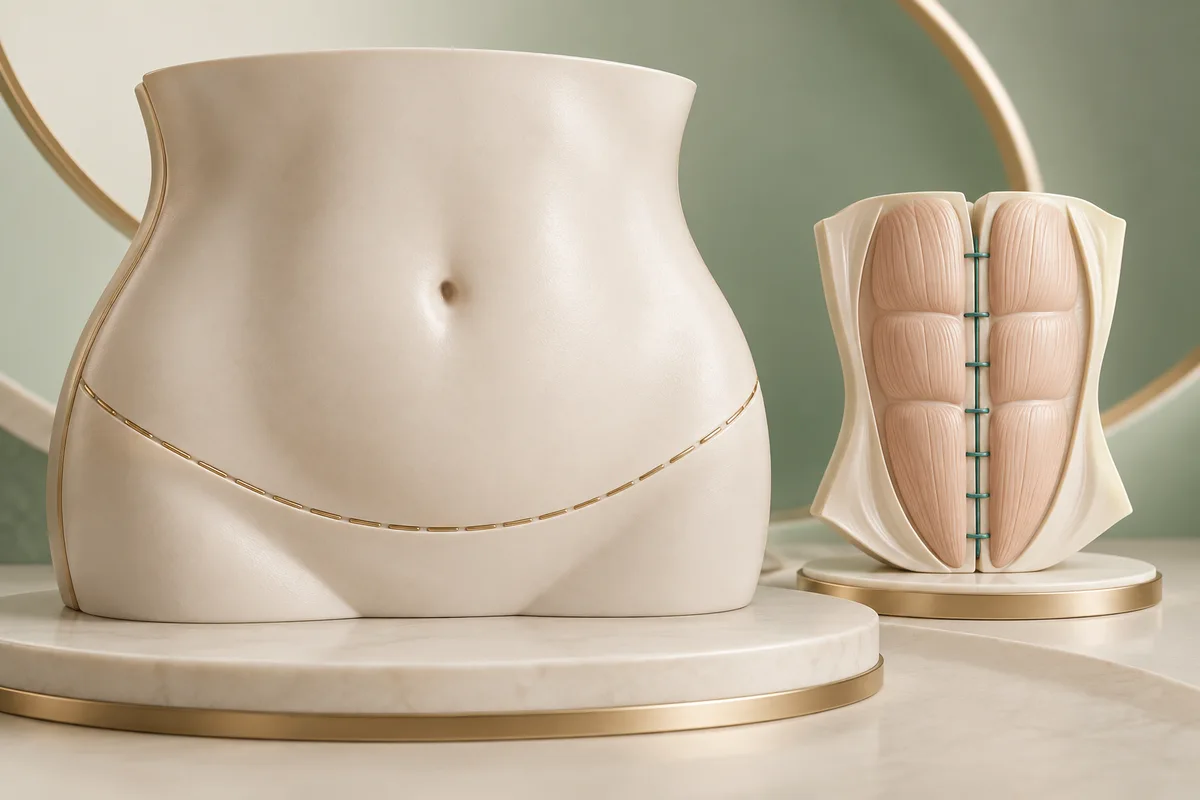
Abdominoplasty concept
AI-created conceptual artwork; not a patient result or an exact surgical diagram.
Explore the educational diagram and sources
Educational illustration
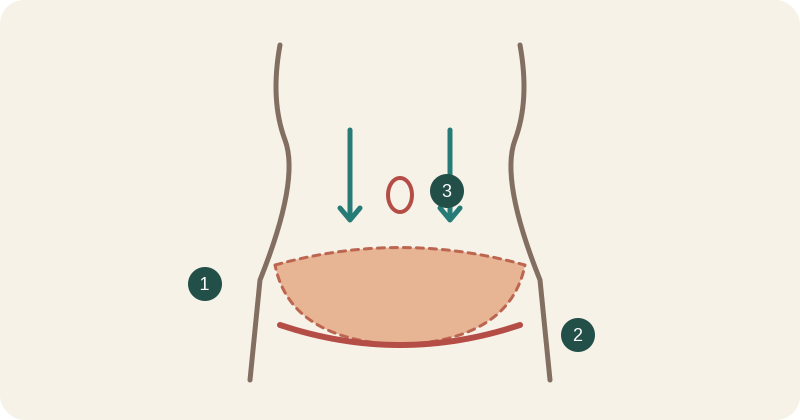
Full abdominoplasty, simplified: 1 shaded excess lower-abdominal skin; 2 low closure line; 3 opening around the navel. Arrows show skin redraping, not a guaranteed outcome.
An educational schematic, not a patient result or a personalized treatment plan. Original labels may be in another language.
Open larger image ↗Source & licence
Original Taharaz educational schematic; clinical reference linked below
Procedure concept — clinical reference · Original illustration
Simplified educational image; not to scale.
Preparing for surgery
- This is general guidance. Your procedure, medical conditions and discharge instructions take priority. Ask about the exact technique and its specific risks before consenting.
- Disclose medicines, supplements, allergies, previous clots or bleeding, diabetes, sleep apnoea, previous surgery and possible pregnancy. Do not stop blood thinners, diabetes medicines, weight-loss injections or psychiatric medicines yourself; obtain a medication and fasting plan from your team.
- Tests and cardiac or anaesthetic assessment depend on your condition, not a standard package for everyone. Anaemia, infection, malnutrition and poorly controlled glucose should be assessed and corrected when needed. Plan to stop smoking and other nicotine products several weeks beforehand with professional support.
- Continue balanced meals, adequate protein and hydration unless you have heart or kidney restrictions. Use a special diet, bowel preparation or a light final meal only when written for your operation; obtain exact solid-food and fluid cut-off times from the anaesthesia team rather than guessing.
- Arrange an adult escort after sedation or anaesthesia and help at home. Do not drive until drug effects have worn off and the team permits it. Before booking travel, especially long flights, obtain clearance and a clot-prevention plan.
Compression, drains and wound care
- Wear a correctly sized garment only as instructed. Excess pressure, pain, numbness or skin colour change needs contact. Tighter compression does not improve results.
- Record drain volume and colour as taught. Do not pull or open the drain yourself. Report stopped drainage with swelling or increasing bright-red blood.
- Showering and dressings depend on wounds and drains. Do not apply heat or direct ice to numb skin. Massage, lymphatic drainage and scar creams need the surgeon’s permission.
Posture and clot prevention
- A slightly flexed posture may initially be recommended to reduce tension. Follow your surgeon’s instructions and do not force upright posture. Continue short, frequent walks.
- Avoid abdominal exercise, lifting children or heavy loads and strenuous work until cleared. Take prescribed clot prevention exactly as directed; obtain a separate plan for flying or long travel.
- Swelling and altered sensation may persist. Do not judge final shape too early. A highly restrictive diet is inappropriate during healing.
Abdominal warning signs
- Rapid or one-sided swelling, significant bleeding, dark or blistered skin, wound separation, foul discharge or increasing pain need same-day contact. Breathlessness or chest pain is an emergency.
Medicines, movement and follow-up
- Take painkillers and other medicines only as prescribed. Antibiotics or anticoagulant injections are not needed in the same way for everyone. Opioids can cause drowsiness and constipation; alcohol and driving while taking them are unsafe.
- Start short, frequent walks when permitted; prolonged bed rest is not appropriate. Return to work, exercise, sex and lifting depends on technique and healing. Obtain written restrictions.
- Before discharge, confirm dressings, showering, stitch or drain removal and your first review. Do not disturb wounds, adhesive, stitches or drains, or apply unprescribed creams or antiseptics to open wounds.
- Restart fluids and food according to the operation. If unrestricted, begin with small light portions, eat slowly and stop for nausea or pain; then add protein, vegetables and regular textures gradually. After stomach, bowel, anal or hiatal-hernia procedures, use the procedure-specific plan.
- Eat a balanced diet with adequate protein and fluids appropriate to your health conditions and prevent constipation with movement, fluids and prescribed treatment. Recovery and final results vary. Persistent or recurrent symptoms require assessment, not self-treatment.
General warning signs — urgent assessment
- Breathlessness, chest pain, coughing blood, fainting or one-sided calf pain and swelling require immediate assessment. Call local emergency services; in Türkiye, 112.
- Report heavy or ongoing bleeding, worsening pain not controlled by prescribed medicine, fever with feeling unwell, spreading redness or foul discharge, repeated vomiting, inability to drink or urinary retention immediately. Website messages do not replace emergency care.
Sources
Was this guide helpful?
Your feedback helps us improve this guide.