Guide available
In this guide
Medical assessment and preparation
- Share all medical conditions, allergies, previous surgery, medicines and supplements; report facial weakness, neurological disease, hair loss, previous facial or eye surgery and wound-healing problems.
- Tell the surgeon about aspirin, warfarin, clopidogrel, other anticoagulants, anti-inflammatory drugs and herbal products. Never stop prescribed medicine on your own.
- Stop smoking, vaping and all nicotine according to the surgeon's plan before and after surgery.
- Your hairline, natural brow asymmetry, eyelids and operative technique will be assessed and standard photographs taken.
- Perfect symmetry, invisible scars or complete avoidance of temporary sensory change or hair shedding cannot be guaranteed; discuss realistic expectations.

Facial contour and rejuvenation
AI-created conceptual artwork; not a patient result or an exact surgical diagram.
Explore the educational diagram and sources
Educational illustration
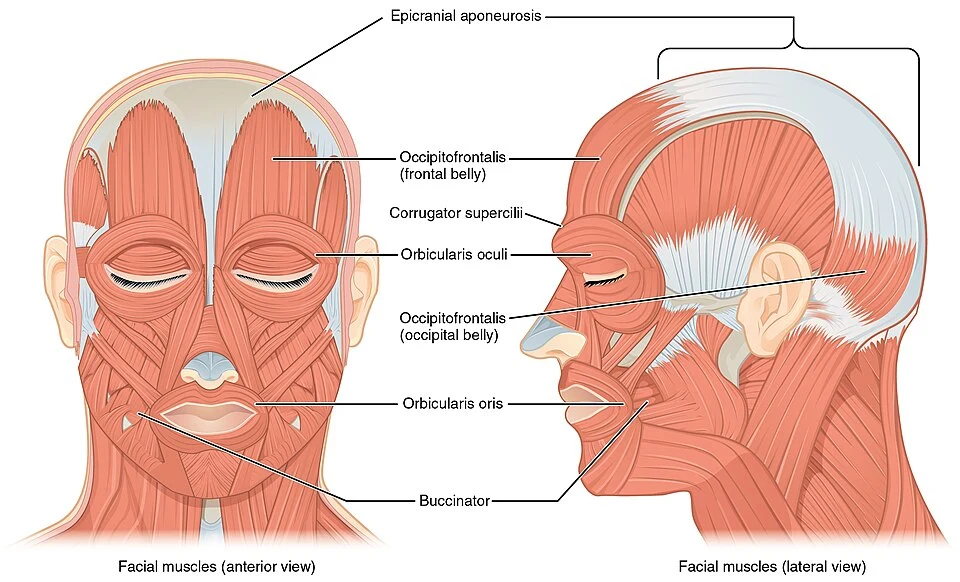
Facial muscles around the eyes, forehead and mouth; an anatomical reference for facial procedures.
An educational schematic, not a patient result or a personalized treatment plan. Original labels may be in another language.
Open larger image ↗Source & licence
OpenStax
1106 Front and Side Views of the Muscles of Facial Expressions.jpg · CC BY 4.0
Simplified educational image; not to scale.
The night before and surgery day
- Follow the surgeon's and anaesthetist's exact fasting instructions and take only medicines approved for that morning.
- Arrive with clean hair and face and no make-up, cream, hair spray, gel or oil, false eyelashes, contact lenses, jewellery or nail polish.
- Wear comfortable front-opening clothing so nothing needs to be pulled over your head.
- Arrange an adult escort and someone for the first night; do not drive after anaesthesia or sedation.
The first 48–72 hours
- Rest and sleep on your back with your head elevated on two or three pillows.
- Do not move the dressing, head wrap or drain. If a drain is present, record the amount and colour and follow emptying and removal instructions.
- Use a cool compress only if the surgeon advises it, without pressure and away from incisions; never apply direct ice or heat to the forehead or surgical area.
- Use pain medicine, antibiotics and ointment only as prescribed, and do not rub, massage or pick at wounds.
- Limit prolonged bending, straining, uncontrolled coughing and activities that increase pressure in the head and face.
Wound, hair and suture care
- Timing of dressing removal, showering and hair washing depends on the technique and dressing; follow the team's specific instructions.
- Do not remove crusts, glue, sutures or clips. Avoid hair dye, chemicals, hot dryers and accessories that press on incisions until healed.
- Sutures or clips are commonly removed at about 7–14 days depending on the technique.
- Once wounds are fully closed and approved, use sunscreen and sun protection to help scars fade.
Activity and normal recovery
- Forehead and eyelid swelling or bruising, tightness, itching, tingling and temporary numbness can occur and should gradually improve.
- The brows may initially look high or uneven; do not judge the final result until swelling has settled.
- Light walking is encouraged, but avoid strenuous exercise, heavy lifting and swimming until approved.
- Do not drive until vision is clear, head movement is comfortable and you are no longer taking sedating medicine.
- Many patients return to light work in about 10–14 days, but swelling and final refinement may continue for weeks to months.
Follow-up
- The first review is usually arranged within the first few days according to the technique, to check dressings, wounds and any drain.
- A further visit is arranged for suture or clip removal and symmetry assessment.
- Scars, sensation, hairline and final result are reviewed over the following weeks and months; your surgeon's personal instructions take priority.
Urgent warning signs
- Sudden, rapidly increasing, firm or one-sided swelling, continuing bleeding, or severe and increasing pain.
- Sudden loss or blurring of vision, new double vision, eye pain, eye protrusion or inability to close an eye.
- New one-sided facial or brow weakness, worsening numbness or unusual skin colour change.
- Fever above 38°C, spreading redness, warmth, bad odour, pus or wound opening.
- Shortness of breath, chest pain, irregular heartbeat, fainting or any sudden worrying symptom; do not wait for the next appointment.
Was this guide helpful?
Your feedback helps us improve this guide.