Guide available
In this guide
Colon and rectal conditions
- Constipation, irritable bowel syndrome, diverticular disease, colitis, polyps and cancer have different causes. IBS is not inflammatory bowel disease. Do not automatically attribute rectal bleeding to haemorrhoids.
Colorectal care concept
AI-created conceptual artwork; not a patient result or an exact surgical diagram.
Explore the educational diagram and sources
Educational illustration
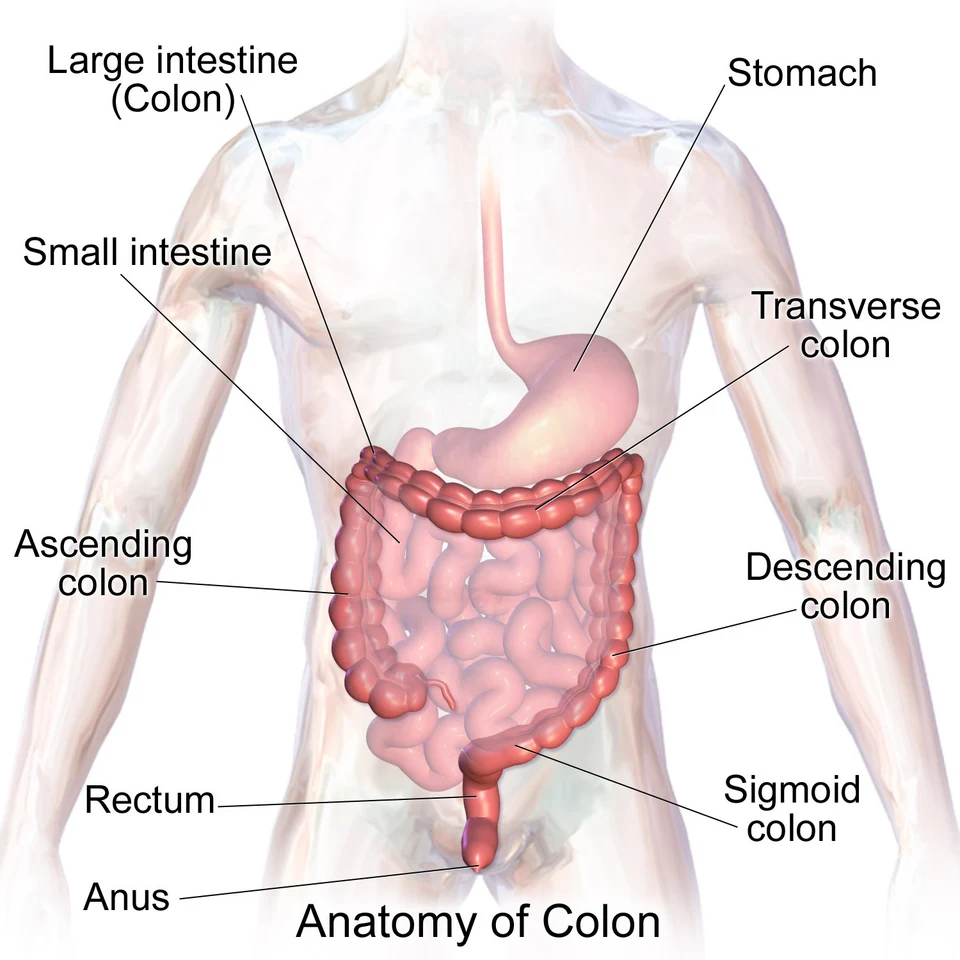
Colon and rectum anatomy, showing their relationship to the small intestine and anus.
An educational schematic, not a patient result or a personalized treatment plan. Original labels may be in another language.
Open larger image ↗Source & licence
Blausen.com staff (2014), Medical gallery of Blausen Medical 2014, WikiJournal of Medicine 1(2), doi:10.15347/wjm/2014.010
Blausen 0603 LargeIntestine Anatomy.png · CC BY 3.0
Simplified educational image; not to scale.
Polyps, screening and colonoscopy
- Some polyps can become cancerous; removal and pathology determine follow-up. Screening schedules depend on age, country and risk. Symptoms need diagnostic assessment. A positive stool screening test usually requires colonoscopy, not simply a repeat stool test. Follow bowel-preparation instructions and discuss diabetes, kidney disease and blood thinners.
Treatment and recovery
- Fibre is not appropriate for every acute bowel problem. Colitis and diverticulitis treatment depends on severity. Colon and rectal cancer may need surgery, medicines and, for selected rectal cancers, radiotherapy. After polyp removal or surgery, obtain a diet, activity and delayed-bleeding plan. A stoma requires skin, appliance and hydration education and is not always permanent.
Warning signs
- Heavy bleeding or dizziness, severe pain with fever, distension and vomiting or no gas needs urgent assessment. Persistent bowel changes, iron-deficiency anaemia, unexplained weight loss or blood in stool needs prompt investigation.
Sources
Was this guide helpful?
Your feedback helps us improve this guide.