In this guide
What is a duodenal switch?
- This operation combines a smaller stomach with intestinal rerouting and reduces nutrient absorption. It requires specialist assessment and a commitment to lifelong follow-up.
- Classic BPD-DS is not the same as SADI-S; the intestinal route and number of connections differ. Keep the exact procedure name and your operation report.
- Weight loss and metabolic benefits can be substantial, but malnutrition and vitamin-deficiency risks are greater. It is not suitable for everyone.

Metabolic and bariatric care
AI-created conceptual artwork; not a patient result or an exact surgical diagram.
Explore the educational diagram and sources
Educational illustration
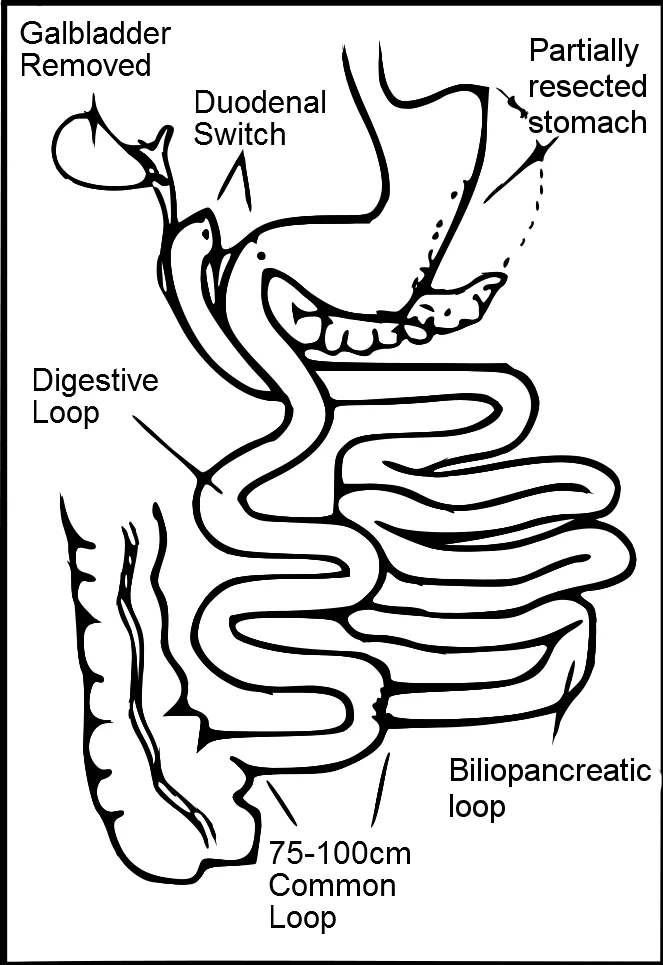
Traditional duodenal-switch schematic. Limb lengths and gallbladder removal shown here are not universal; the operation is individually planned.
An educational schematic, not a patient result or a personalized treatment plan. Original labels may be in another language.
Open larger image ↗Source & licence
NIDDK / NIH; derivative: Jan Friberg and Steven Fruitsmaak
Sleeve gastrectomy duodenal switch.png · Public domain
Simplified educational image; not to scale.
Preparing for treatment
- The choice depends on weight, associated conditions, reflux, previous surgery, nutrition and ability to attend follow-up. This page is not a personal prescription.
- Disclose all medicines, supplements, allergies, smoking, previous clots, sleep apnoea and possible pregnancy. Do not stop diabetes medicines, blood thinners or weight-loss injections yourself; obtain medication and fasting instructions from the anaesthesia team.
- Tests and, when needed, endoscopy are arranged by your doctor. Anaemia, nutritional deficiencies, ulcers or active infection and uncontrolled conditions must be assessed and treated before the procedure when necessary.
- Arrange an adult escort and safe travel after sedation or anaesthesia. Do not drive until your care team permits it.
Lifelong care
- Adequate protein, procedure-specific supplements and regular lifelong blood tests are essential. A standard multivitamin alone may be insufficient; doses must be guided by tests and the care team.
- Iron, calcium and fat-soluble vitamin deficiencies and protein malnutrition are important concerns. Report diarrhoea or fatty stools, weakness, swelling or excessive weight loss.
- Obtain your laboratory and nutrition plan at discharge. A good weight or absence of symptoms does not make stopping follow-up safe.
Explore the educational diagram and sources
Educational illustration
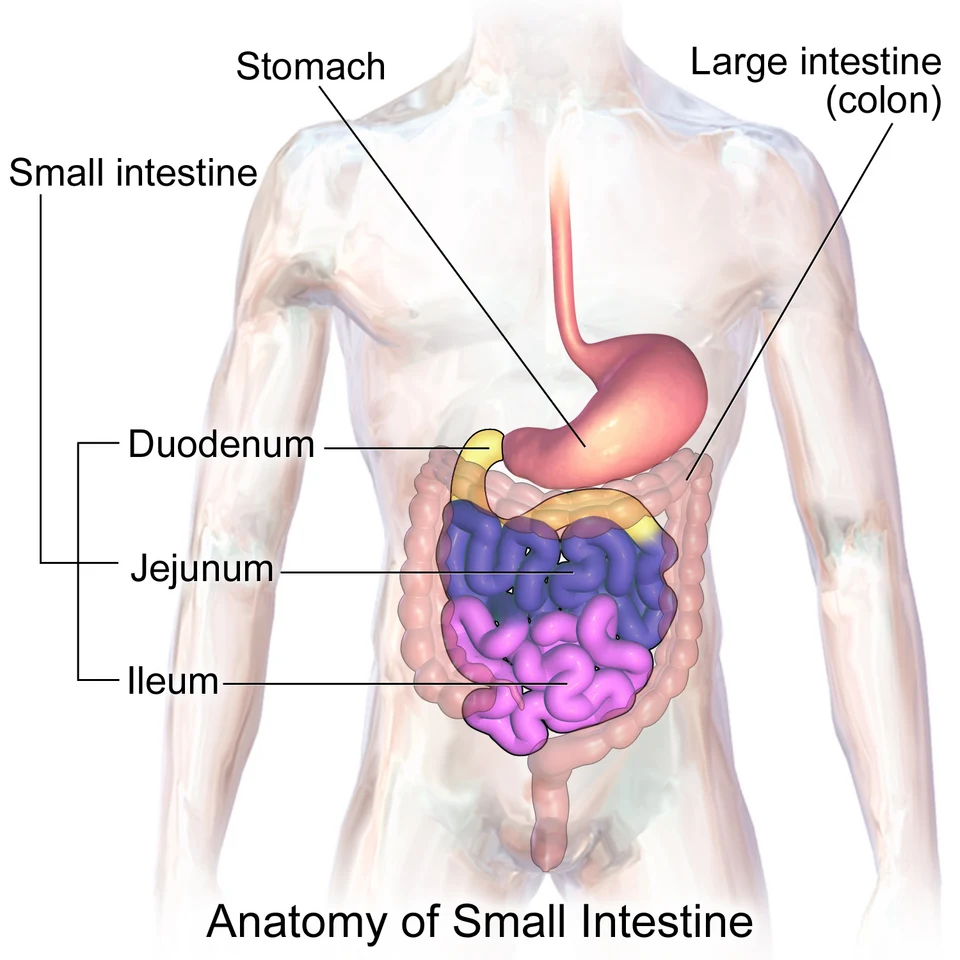
Duodenum, jejunum and ileum: the three parts of the small intestine.
An educational schematic, not a patient result or a personalized treatment plan. Original labels may be in another language.
Open larger image ↗Source & licence
Blausen.com staff (2014), Medical gallery of Blausen Medical 2014, WikiJournal of Medicine 1(2), doi:10.15347/wjm/2014.010
Blausen 0817 SmallIntestine Anatomy.png · CC BY 3.0
Simplified educational image; not to scale.
Nutrition, activity and follow-up
- Ask your team when to start fluids and progress to soft and regular food. Eat slowly, take small bites and stop when you feel pressure or fullness. Do not assume repeated vomiting is normal.
- Sip fluids and follow your individual protein plan. High-calorie drinks and grazing can reduce treatment effectiveness. Do not add supplements or weight-loss medicines yourself.
- Start gentle walking when permitted. After surgery, strenuous exercise and heavy lifting require your surgeon’s approval. Sleep, family support and nutritional follow-up are important parts of treatment.
- Before discharge, confirm appointments, an emergency number and follow-up after returning home. Weight regain is not a personal failing; nutrition, medicines and digestive anatomy may need reassessment.
Warning signs — do not wait for your next appointment
- Severe or worsening abdominal or chest pain, breathlessness, fainting, gastrointestinal bleeding, fever with feeling unwell, repeated vomiting or inability to drink require urgent assessment.
- For severe symptoms call local emergency services; in Türkiye, 112. Bring the procedure name, date and medication list. Online messaging is not a substitute for emergency assessment.
Sources
Was this guide helpful?
Your feedback helps us improve this guide.