In this guide
Common conditions
- Reflux, inflammation, narrowing, eosinophilic oesophagitis and movement disorders such as achalasia can affect swallowing. Barrett’s oesophagus is a lining change, not cancer, but may require surveillance. Progressive difficulty swallowing and weight loss need investigation.

Esophagus and its connection to the stomach
AI-created conceptual artwork; not a patient result or an exact surgical diagram.
Explore the educational diagram and sources
Educational illustration
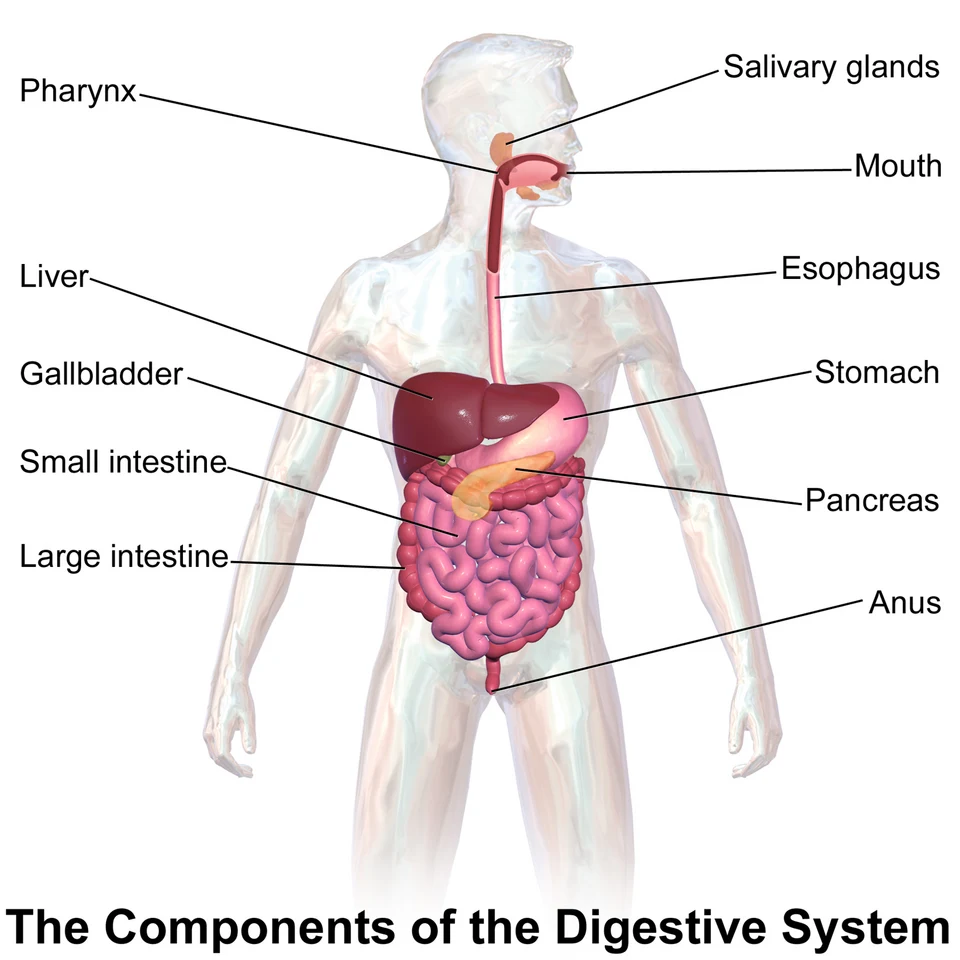
The digestive tract and associated organs: follow the route from the mouth to the intestine.
An educational schematic, not a patient result or a personalized treatment plan. Original labels may be in another language.
Open larger image ↗Source & licence
Blausen.com staff (2014), Medical gallery of Blausen Medical 2014, WikiJournal of Medicine 1(2), doi:10.15347/wjm/2014.010
Blausen 0316 DigestiveSystem.png · CC BY 3.0
Simplified educational image; not to scale.
Tests and treatment
- Endoscopy with biopsy, contrast swallow, manometry or acid monitoring answer different questions. Reflux may improve with smaller meals, avoiding lying down for about three hours after eating and weight management when appropriate. Take medicines as prescribed. Strictures, achalasia and cancer may need endoscopic, surgical or oncology treatment.
Preparation and aftercare
- Confirm fasting, medicine adjustments and an escort after sedation. After surgery, food texture, nutritional support and activity depend on the operation; follow the team’s plan.
Explore the educational diagram and sources
Educational illustration
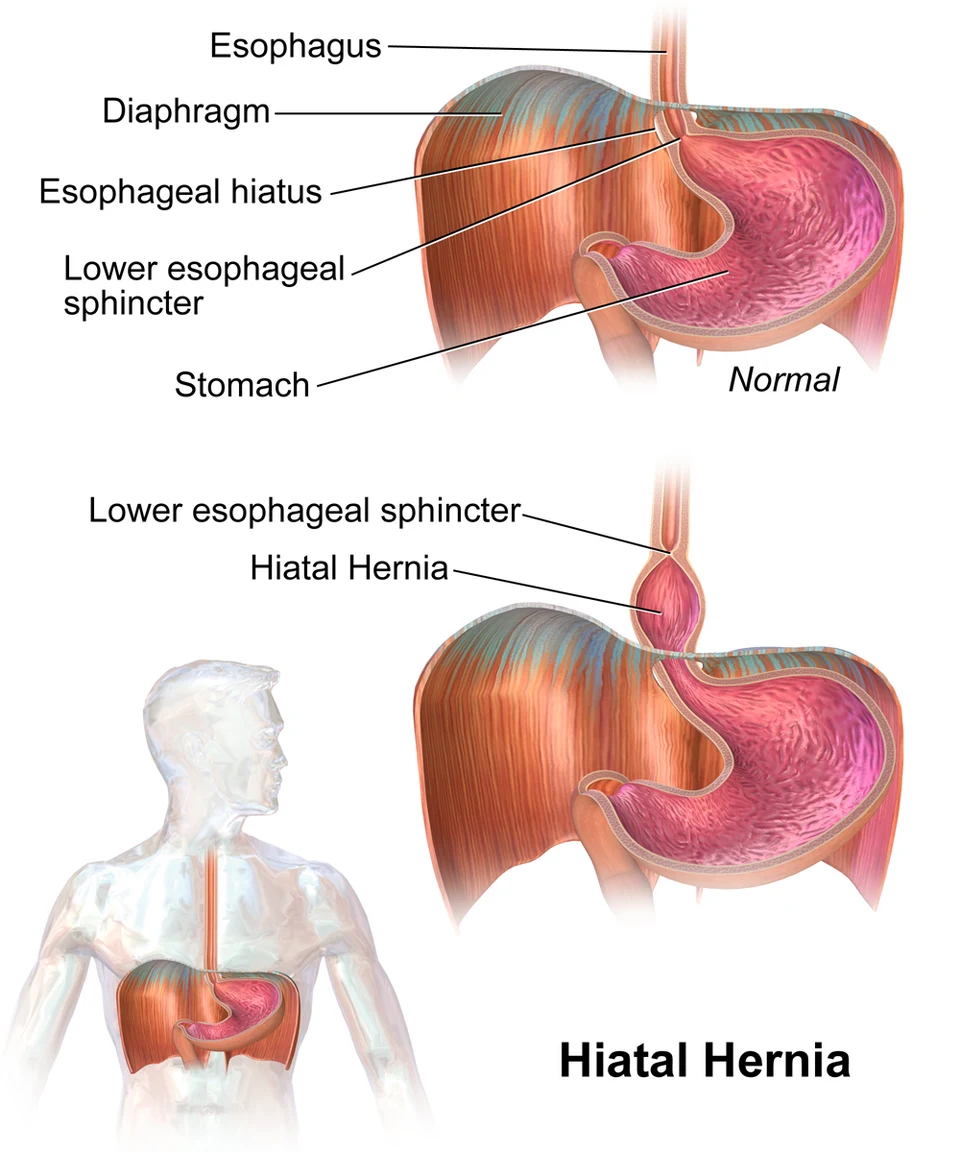
Normal position compared with a hiatal hernia, where part of the stomach moves above the diaphragm.
An educational schematic, not a patient result or a personalized treatment plan. Original labels may be in another language.
Open larger image ↗Source & licence
BruceBlaus
Hiatal Hernia.png · CC BY-SA 4.0
Simplified educational image; not to scale.
Warning signs
- Food stuck with inability to swallow saliva, vomiting blood, black stools, sudden severe chest pain or breathlessness needs emergency care. Do not assume new chest pain is reflux. Progressive swallowing difficulty needs prompt review.
Sources
Was this guide helpful?
Your feedback helps us improve this guide.