Guide available
In this guide
Gastric botulinum toxin: evidence and limitations
- Botulinum toxin is injected into the stomach wall during endoscopy to temporarily alter gastric movement. No stomach is removed and the intestine is not rerouted.
- Weight-loss evidence is inconsistent and results cannot be guaranteed. It should not be presented as equivalent to established surgery or a proven treatment for everyone. Ask about better-supported alternatives and product and indication approval in the country of treatment.
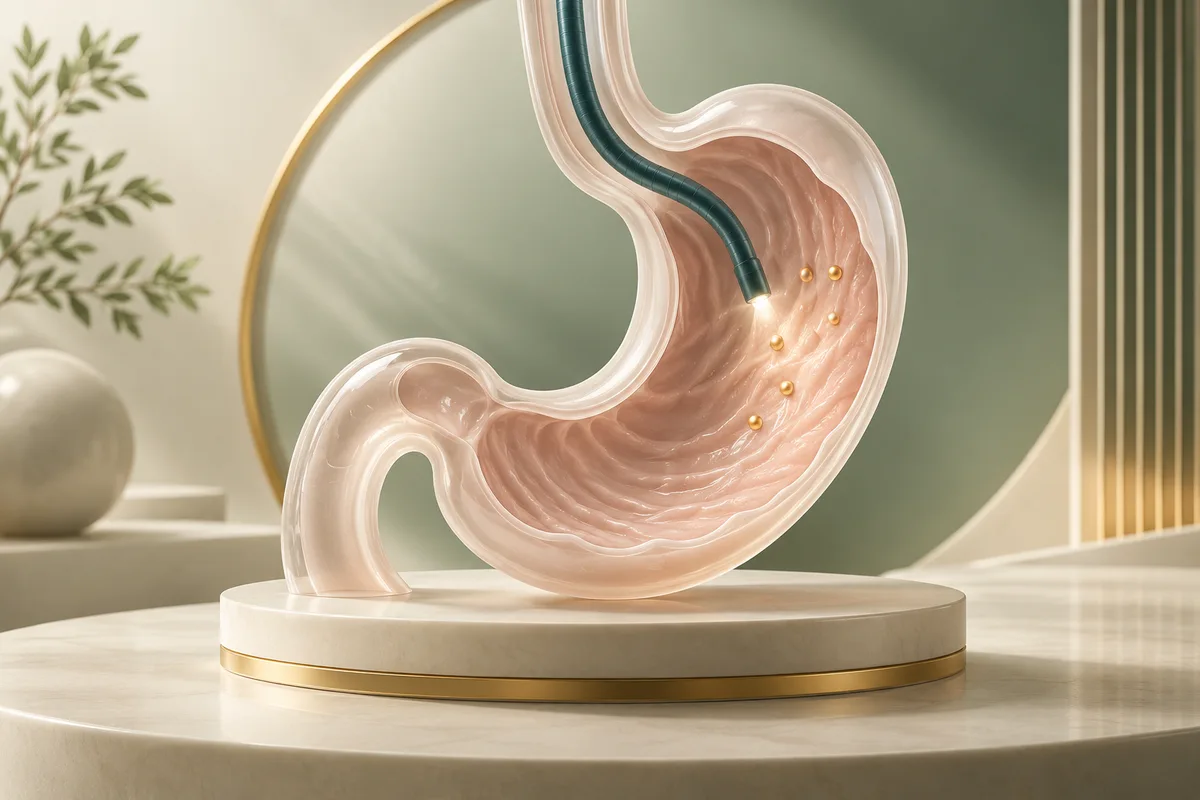
Gastric botulinum toxin concept
AI-created conceptual artwork; not a patient result or an exact surgical diagram.
Explore the educational diagram and sources
Educational illustration
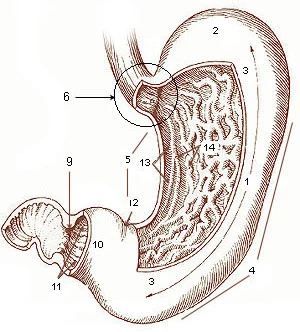
Stomach anatomy: the esophagus enters at the top and the pylorus leads into the duodenum.
An educational schematic, not a patient result or a personalized treatment plan. Original labels may be in another language.
Open larger image ↗Source & licence
National Cancer Institute / NIH (SEER)
Illu stomach.jpg · Public domain
Simplified educational image; not to scale.
Preparing for treatment
- The choice depends on weight, associated conditions, reflux, previous surgery, nutrition and ability to attend follow-up. This page is not a personal prescription.
- Disclose all medicines, supplements, allergies, smoking, previous clots, sleep apnoea and possible pregnancy. Do not stop diabetes medicines, blood thinners or weight-loss injections yourself; obtain medication and fasting instructions from the anaesthesia team.
- Tests and, when needed, endoscopy are arranged by your doctor. Anaemia, nutritional deficiencies, ulcers or active infection and uncontrolled conditions must be assessed and treated before the procedure when necessary.
- Arrange an adult escort and safe travel after sedation or anaesthesia. Do not drive until your care team permits it.
Care and informed choice
- Disclose neuromuscular disease, swallowing or breathing problems, previous botulinum toxin injections and all medicines. Product and dose selection belong to the physician; this guide does not give injection instructions.
- Follow the centre’s instructions on restarting food and activity after endoscopy. Do not arrange repeat injections or add weight-loss medicines yourself.
- This procedure is not risk-free. In addition to endoscopy and sedation risks, cases of botulism after intragastric injections have been reported.
Specific warning: spread of toxin effects
- Double vision, drooping eyelids, difficulty speaking or swallowing, generalised weakness or breathing problems after injection are emergencies, even if delayed. Seek immediate care and tell the emergency doctor the injection date and product name.
Nutrition, activity and follow-up
- Ask your team when to start fluids and progress to soft and regular food. Eat slowly, take small bites and stop when you feel pressure or fullness. Do not assume repeated vomiting is normal.
- Sip fluids and follow your individual protein plan. High-calorie drinks and grazing can reduce treatment effectiveness. Do not add supplements or weight-loss medicines yourself.
- Start gentle walking when permitted. After surgery, strenuous exercise and heavy lifting require your surgeon’s approval. Sleep, family support and nutritional follow-up are important parts of treatment.
- Before discharge, confirm appointments, an emergency number and follow-up after returning home. Weight regain is not a personal failing; nutrition, medicines and digestive anatomy may need reassessment.
Warning signs — do not wait for your next appointment
- Severe or worsening abdominal or chest pain, breathlessness, fainting, gastrointestinal bleeding, fever with feeling unwell, repeated vomiting or inability to drink require urgent assessment.
- For severe symptoms call local emergency services; in Türkiye, 112. Bring the procedure name, date and medication list. Online messaging is not a substitute for emergency assessment.
Sources
Was this guide helpful?
Your feedback helps us improve this guide.