Guide available
In this guide
What is gynecomastia?
- Gynecomastia is enlargement of male breast glandular tissue. Fat accumulation without glandular enlargement is pseudogynecomastia; both can coexist.
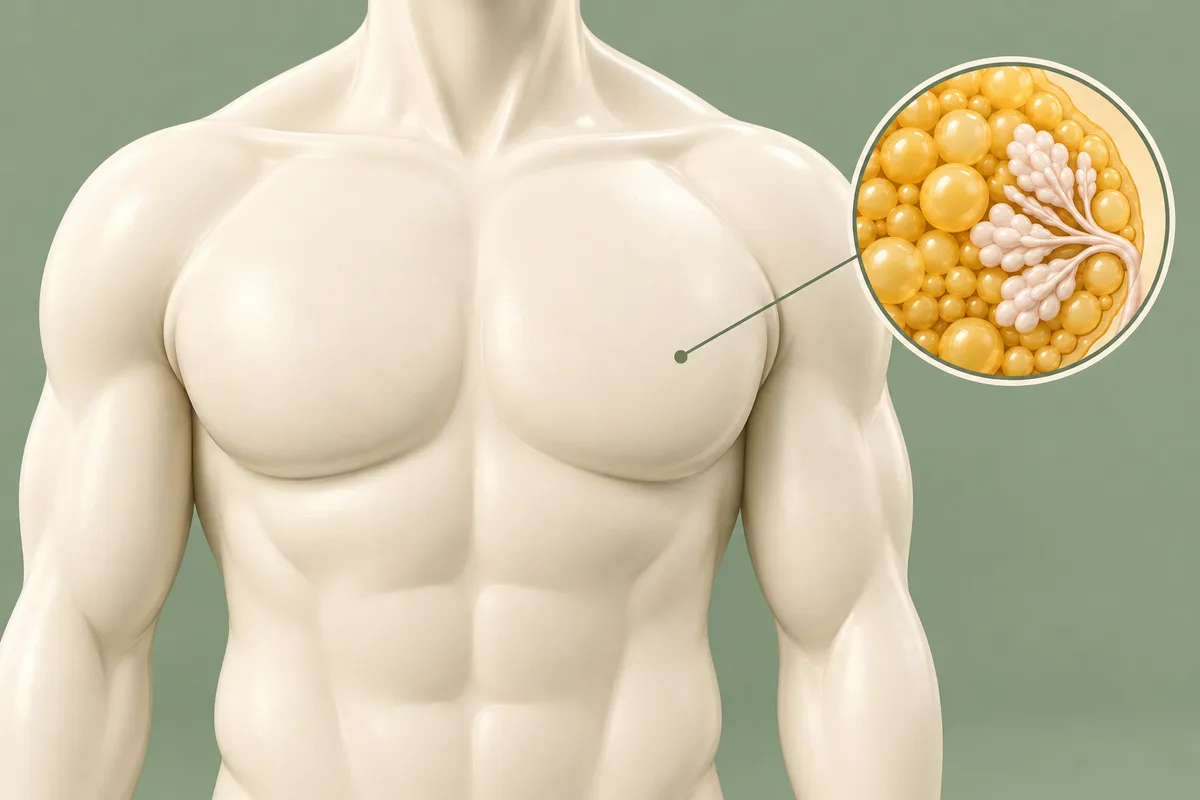
Concept of male gynecomastia, glandular tissue and fat
AI-created conceptual artwork; not a patient result or an exact surgical diagram.
Assessment before treatment
- A clinical examination and assessment of the cause come before cosmetic treatment. Tell your clinician about medicines, supplements, hormones and symptom onset. Tests or imaging depend on the assessment. Do not stop prescribed medicines yourself.
Choosing surgery
- Persistent, troublesome enlargement may be treated by gland excision, liposuction for associated fat, and skin removal when needed. The plan depends on tissue and skin excess; liposuction alone does not reliably remove glandular tissue.
Risks and aftercare
- Surgical risks include bleeding or haematoma, infection, fluid collections, scars, altered nipple sensation, asymmetry and revision. Follow your surgeon's instructions for compression, wound care and return to exercise. Recovery and results vary.
When to seek prompt care
- A hard lump, rapid one-sided enlargement, bloody nipple discharge or skin dimpling needs prompt assessment. After any procedure, report rapid swelling, worsening pain, fever or skin colour changes urgently. Chest pain or breathlessness requires emergency help.
Sources
Was this guide helpful?
Your feedback helps us improve this guide.