Guide available
In this guide
1. Small glands with a different role
- The parathyroids are usually four small glands behind the thyroid, although their number and position vary. They produce parathyroid hormone (PTH), which regulates blood calcium through the bones, kidneys and vitamin D system. Parathyroid disease is different from thyroid-hormone disease.
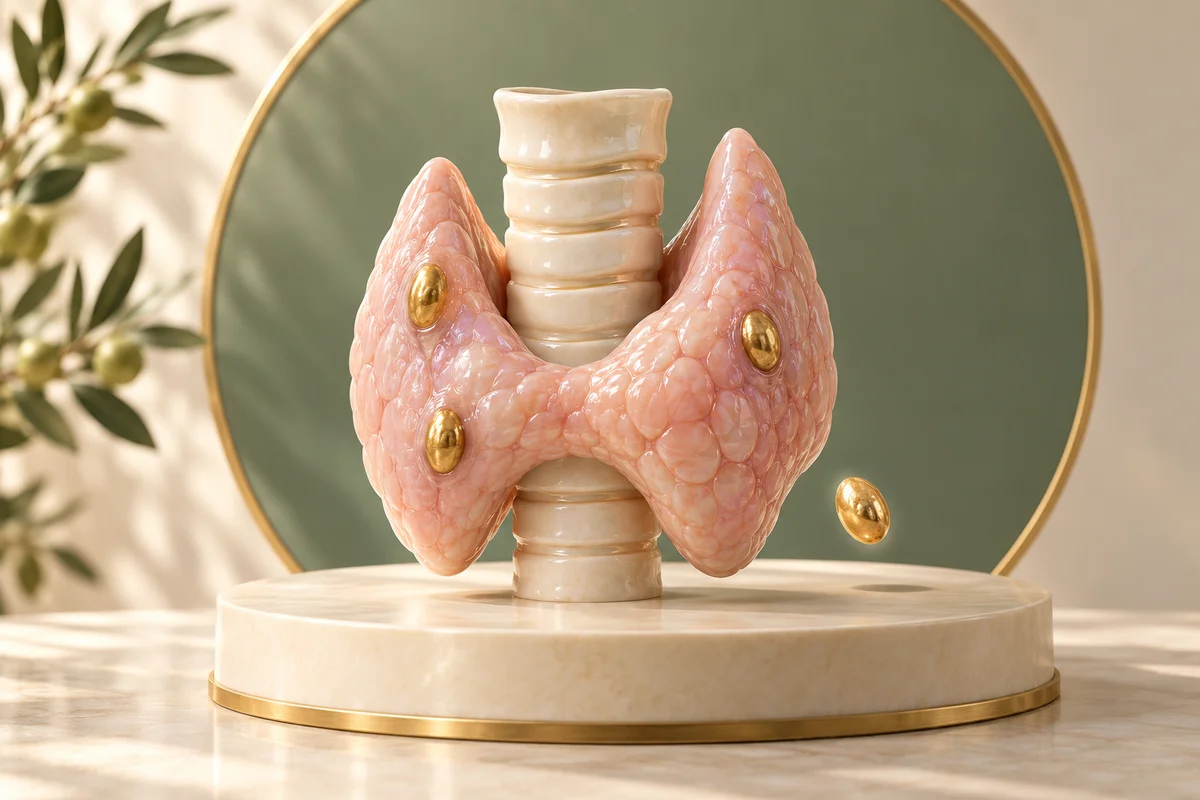
Concept of parathyroid excision; the glands are normally behind the thyroid.
AI-created conceptual artwork; not a patient result or an exact surgical diagram.
2. Types of parathyroid disease
- Primary hyperparathyroidism means excess PTH from one or more glands, most often a benign adenoma; several glands may be enlarged. Cancer is rare. Secondary hyperparathyroidism is a response to problems such as chronic kidney disease, vitamin D deficiency or calcium malabsorption. Long-standing disease, usually related to kidney failure, may become autonomous (tertiary).
- Low PTH, sometimes after neck surgery, can cause low calcium. A high PTH result on its own is not enough to diagnose a parathyroid adenoma or decide on surgery.
3. Symptoms and possible effects
- High calcium may cause thirst, frequent urination, constipation, fatigue or weakness, but many people have no symptoms. Kidney stones, reduced kidney function, bone loss and fractures are important possible consequences. Concentration or mood symptoms have many causes and may not all improve after treatment.
4. Establishing the diagnosis
- Assessment may include repeated albumin-adjusted or ionised calcium with PTH, phosphate, vitamin D and kidney function. Bone-density testing, kidney imaging and urine calcium help evaluate impact and alternative diagnoses. Medicines such as lithium or thiazides should be reviewed, not stopped without advice.
- Familial hypocalciuric hypercalcaemia can resemble primary disease and usually does not benefit from parathyroid surgery. Family history, urine testing and sometimes genetics help distinguish it. After bariatric surgery, low vitamin D or reduced calcium absorption may raise PTH; tell the team about your operation and supplements.
5. What do scans tell us?
- Ultrasound, sestamibi imaging and sometimes 4D-CT or other specialist scans locate abnormal glands when planning an operation. They do not establish the biochemical diagnosis. A negative scan does not rule out disease or automatically exclude surgery. Report pregnancy before radiation-based tests.
6. When is surgery considered?
- Surgery is the definitive treatment for suitable patients with primary hyperparathyroidism. Symptoms, stones, osteoporosis or fracture, impaired kidney function, the degree of calcium elevation, age and patient preferences inform the decision. Selected patients without symptoms also meet criteria.
- Mild disease may be monitored with planned calcium, renal and bone checks. Medicines can control calcium or protect bone in selected circumstances but do not remove an adenoma. Secondary disease is first treated by addressing its cause; severe resistant renal disease may need surgery with nephrology input.
7. Operation options
- A focused parathyroidectomy removes a well-localised abnormal gland; exploration of both sides may be needed when several glands are involved or localisation is uncertain. Intraoperative PTH testing can help assess the response. Multigland and renal disease require an individual plan to preserve enough functioning tissue; subtotal removal or autotransplantation is used in selected cases.
- The thyroid is not routinely removed for isolated parathyroid disease. Discuss any additional thyroid operation separately. General anaesthesia is usual, though selected focused operations may use another anaesthetic approach.
8. Before the operation
- Bring calcium/PTH trends, bone-density and kidney reports, scans and a full medicine list. Mention previous neck surgery, voice changes, kidney disease, bariatric surgery, pregnancy and family endocrine disease. Genetic evaluation may be appropriate in young people, multigland disease or a suggestive family history.
- Correct vitamin D deficiency under supervision and follow the team’s fasting and medication plan. Calcium intake should be individualised; avoid excessive supplements or severe restriction without advice. Arrange help after discharge.
9. Risks and early recovery
- Risks include neck bleeding, voice-nerve injury, infection, low calcium and persistent or recurrent hyperparathyroidism. Hungry bone syndrome occurs when bones take up minerals rapidly after treatment and may require substantial supervised calcium/vitamin D replacement. Risk is greater with severe bone disease or renal hyperparathyroidism.
- The team monitors calcium and sometimes PTH and magnesium. Discharge depends on stability and the operation. Walk gently, eat as tolerated and follow wound-care instructions. Avoid heavy lifting until cleared; do not pick skin glue or soak an unhealed incision.
10. Supplements and ongoing follow-up
- Take calcium and vitamin D exactly as prescribed; some patients need active vitamin D. Requirements can change quickly, so keep scheduled blood tests and do not adjust large doses yourself. If taking levothyroxine, separate calcium by at least four hours.
- Review pathology and repeat calcium/PTH as directed. Longer-term calcium and bone or kidney monitoring may be needed because disease can recur. Parathyroid surgery alone usually does not require lifelong thyroid hormone.
11. Questions to bring to the consultation
- Is my PTH rise primary or secondary? Have vitamin D deficiency, kidney disease and inherited low-urine-calcium disease been considered? Is one gland or more likely involved? What is my calcium plan after surgery? Who manages follow-up if I travel home?
- Keep your discharge summary, supplement doses, blood-test dates and urgent contact details together. Recovery and symptom improvement differ between people; surgery cannot promise that every nonspecific symptom will disappear.
12. When to seek urgent care
- Rapid neck swelling, difficulty breathing, noisy breathing or significant bleeding after surgery are emergencies: call 112 in Türkiye. Do not wait for an online reply.
- New lip or finger tingling, cramps or spasms require prompt contact with the team for possible low calcium. Severe spasms, seizures, fainting or breathing problems require emergency care. Confusion, persistent vomiting, marked dehydration or severe weakness with known high calcium also need urgent assessment. Fever, pus or spreading wound redness should be reported promptly.
Sources
Was this guide helpful?
Your feedback helps us improve this guide.