In this guide
Understanding this topic
Anal fistula
An anal fistula is an abnormal tunnel between the anal canal and the skin, most often developing after an anal abscess. Recurrent drainage, swelling or pain may occur. Fistulas rarely heal permanently with simple antibiotics alone; treatment is usually surgical and depends on how the tract relates to the sphincter muscles. Imaging may be needed in complex or recurrent disease.
colorectal surgical guidancePerianal fistula and preserving bowel control
- A fistula is an abnormal tract between the anal canal and skin, sometimes following an abscess. Treatment depends on its route and sphincter involvement. Fistulotomy, seton, LIFT and flaps suit different situations; no one method fits all.
- The aim is to treat infection and the tract while preserving continence. Treatment may be staged. Disclose Crohn’s disease, diarrhoea, incontinence, abscesses or previous surgery; MRI or other tests are needed in selected cases.
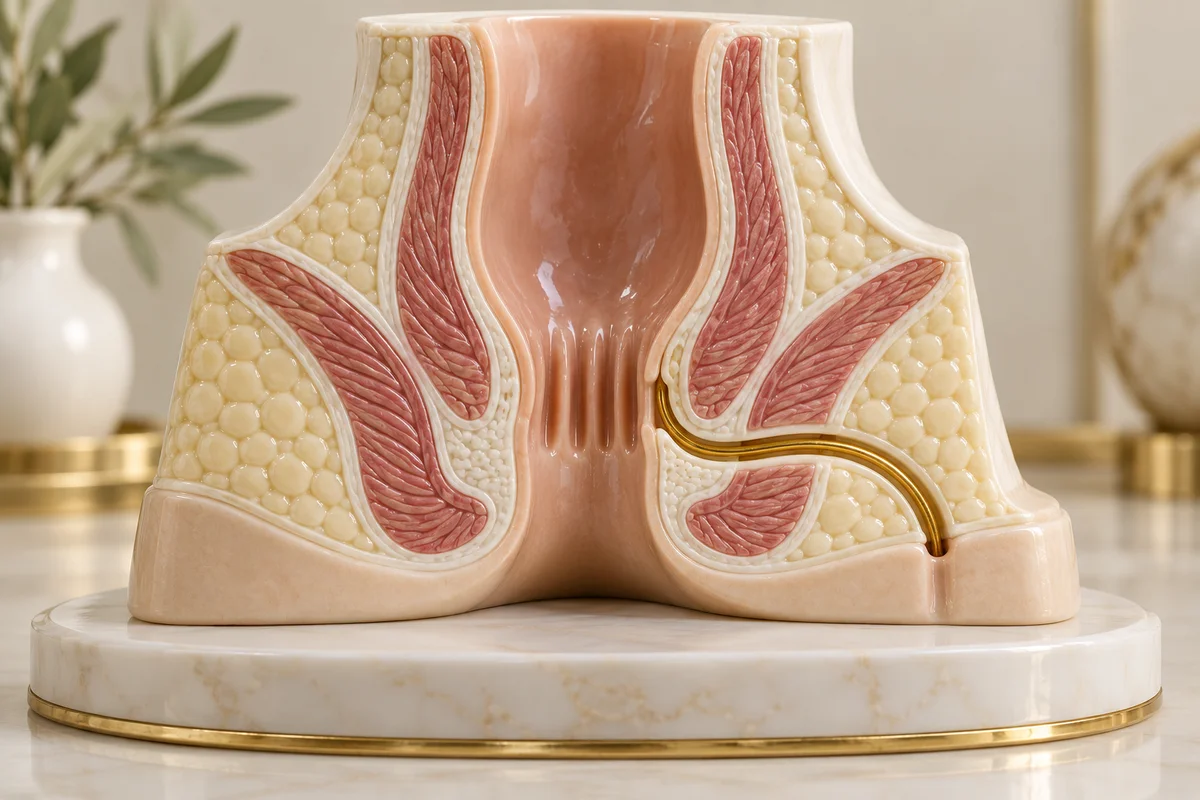
Perianal fistula: an abnormal tract to the skin
AI-created conceptual artwork; not a patient result or an exact surgical diagram.
Explore the educational diagram and sources
Educational illustration
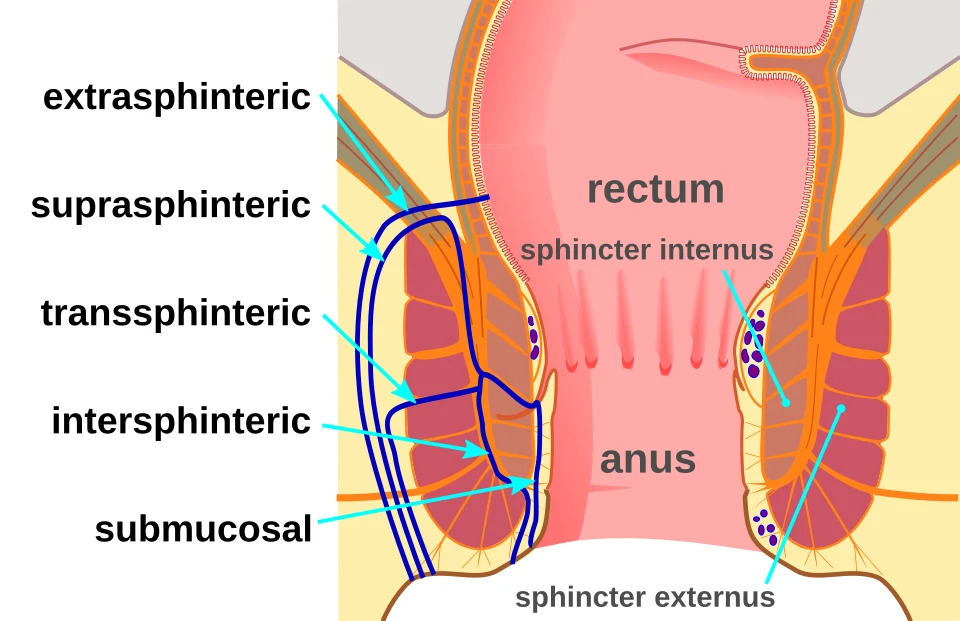
Anal canal, sphincter muscles and possible fistula tracts. This diagram shows fistulas, not an anal fissure.
An educational schematic, not a patient result or a personalized treatment plan. Original labels may be in another language.
Open larger image ↗Source & licence
McortNGHH
Fistula diag 01.svg · CC BY-SA 4.0
Simplified educational image; not to scale.
Preparing for surgery
- This is general guidance. Your procedure, medical conditions and discharge instructions take priority. Ask about the exact technique and its specific risks before consenting.
- Disclose medicines, supplements, allergies, previous clots or bleeding, diabetes, sleep apnoea, previous surgery and possible pregnancy. Do not stop blood thinners, diabetes medicines, weight-loss injections or psychiatric medicines yourself; obtain a medication and fasting plan from your team.
- Tests and cardiac or anaesthetic assessment depend on your condition, not a standard package for everyone. Anaemia, infection, malnutrition and poorly controlled glucose should be assessed and corrected when needed. Plan to stop smoking and other nicotine products several weeks beforehand with professional support.
- Continue balanced meals, adequate protein and hydration unless you have heart or kidney restrictions. Use a special diet, bowel preparation or a light final meal only when written for your operation; obtain exact solid-food and fluid cut-off times from the anaesthesia team rather than guessing.
- Arrange an adult escort after sedation or anaesthesia and help at home. Do not drive until drug effects have worn off and the team permits it. Before booking travel, especially long flights, obtain clearance and a clot-prevention plan.
Comfortable bowel movements and hygiene
- Aim for soft, formed stools, not diarrhoea. Increase fibre gradually and drink enough within any heart or kidney restrictions. Use prescribed stool softeners or laxatives; persistent constipation and diarrhoea both need correction.
- Do not delay bowel movements, strain or sit on the toilet for long periods. Clean gently with lukewarm water after stools and pat dry. Avoid scented soap, irritating products and hot water.
- A brief sitz bath in plain lukewarm water may ease pain if your surgeon permits it. Do not insert suppositories, enemas, ointments or objects unless specifically instructed for your procedure.
Open wounds, discharge and setons
- Some wounds are deliberately left open to heal from the base. Limited drainage may continue; use clean pads and change them regularly. Learn washing and dressing care from the team.
- Do not pull, cut or remove a seton yourself. Drainage with a seton can be part of treatment; confirm your review and next treatment stage.
- Suddenly reduced drainage with pain and swelling may mean blocked drainage and an abscess. Skin closure alone does not prove complete healing.
Activity and longer follow-up
- Start walking and light activity as tolerated. Delay swimming and activities irritating the wound until cleared. Work and sex depend on the site and repair method.
- Recurrence is possible and is not necessarily the patient’s fault. Report persistent drainage, a new opening or changed bowel control. Crohn’s disease requires coordination with gastroenterology.
Abscess or infection warning
- Fever, chills, feeling unwell, hot painful swelling, increasing pain or stopped drainage with swelling needs urgent assessment. Self-prescribed antibiotics do not replace abscess drainage.
Medicines, movement and follow-up
- Take painkillers and other medicines only as prescribed. Antibiotics or anticoagulant injections are not needed in the same way for everyone. Opioids can cause drowsiness and constipation; alcohol and driving while taking them are unsafe.
- Start short, frequent walks when permitted; prolonged bed rest is not appropriate. Return to work, exercise, sex and lifting depends on technique and healing. Obtain written restrictions.
- Before discharge, confirm dressings, showering, stitch or drain removal and your first review. Do not disturb wounds, adhesive, stitches or drains, or apply unprescribed creams or antiseptics to open wounds.
- Restart fluids and food according to the operation. If unrestricted, begin with small light portions, eat slowly and stop for nausea or pain; then add protein, vegetables and regular textures gradually. After stomach, bowel, anal or hiatal-hernia procedures, use the procedure-specific plan.
- Eat a balanced diet with adequate protein and fluids appropriate to your health conditions and prevent constipation with movement, fluids and prescribed treatment. Recovery and final results vary. Persistent or recurrent symptoms require assessment, not self-treatment.
General warning signs — urgent assessment
- Breathlessness, chest pain, coughing blood, fainting or one-sided calf pain and swelling require immediate assessment. Call local emergency services; in Türkiye, 112.
- Report heavy or ongoing bleeding, worsening pain not controlled by prescribed medicine, fever with feeling unwell, spreading redness or foul discharge, repeated vomiting, inability to drink or urinary retention immediately. Website messages do not replace emergency care.
Sources
Was this guide helpful?
Your feedback helps us improve this guide.