Guide available
In this guide
Common problems
- Coeliac disease, Crohn’s disease, infection, malabsorption and obstruction from adhesions or hernias can affect the small bowel. Tumours are less common. Persistent diarrhoea, anaemia or weight loss needs a diagnosis.
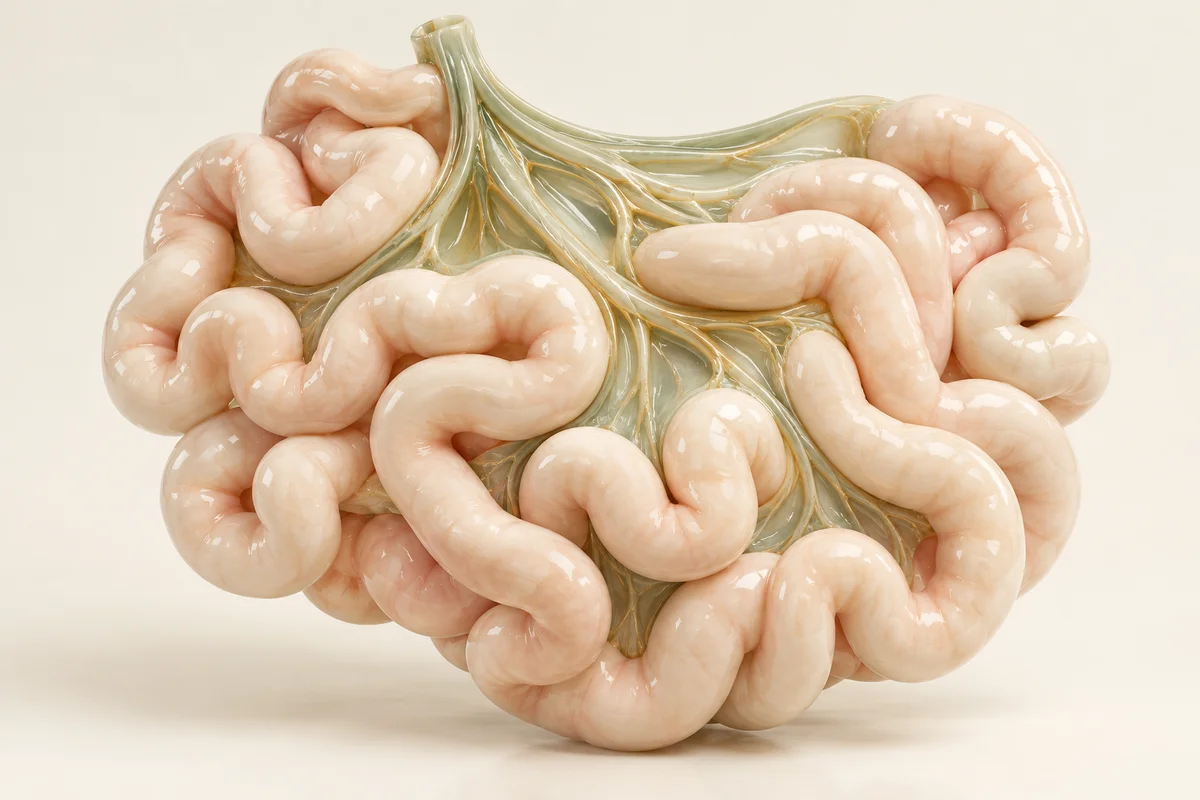
Small intestine
AI-created conceptual artwork; not a patient result or an exact surgical diagram.
Explore the educational diagram and sources
Educational illustration
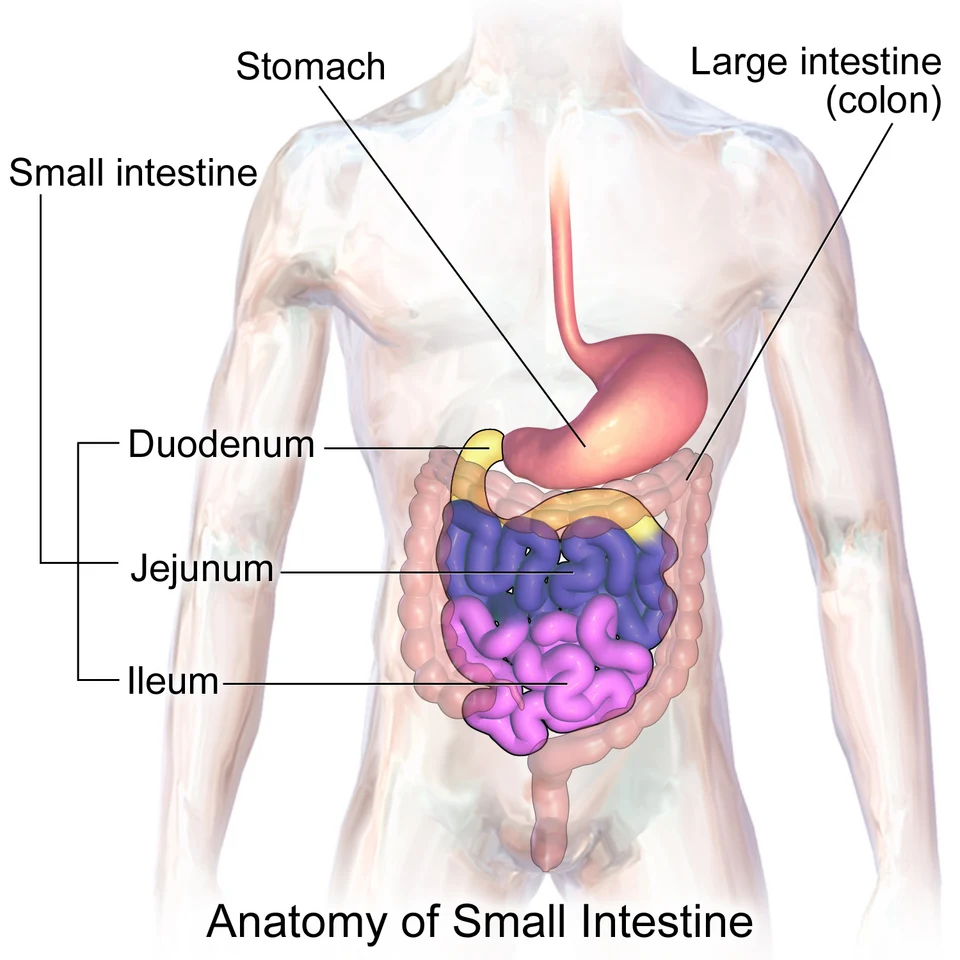
Duodenum, jejunum and ileum: the three parts of the small intestine.
An educational schematic, not a patient result or a personalized treatment plan. Original labels may be in another language.
Open larger image ↗Source & licence
Blausen.com staff (2014), Medical gallery of Blausen Medical 2014, WikiJournal of Medicine 1(2), doi:10.15347/wjm/2014.010
Blausen 0817 SmallIntestine Anatomy.png · CC BY 3.0
Simplified educational image; not to scale.
Tests and nutrition
- Blood and stool tests, endoscopy with biopsy, CT/MR enterography or capsule examination are selected according to symptoms. Do not remove gluten before coeliac testing without advice. A capsule may get stuck in a narrowing, so obstruction risk must be assessed first. Treatment and replacement of nutrients depend on the cause.
Surgery and recovery
- Persistent obstruction, perforation, loss of blood supply, some tumours or Crohn’s complications may require surgery. Extensive removal can change fluid and nutrient absorption; ileal removal may require B12 and diarrhoea follow-up. Follow the individual food and activity plan.
Warning signs
- Severe pain, distension, repeated vomiting, inability to pass gas or stool, bleeding, fainting or very little urine needs urgent care. Do not take laxatives or bulky fibre for suspected obstruction, or self-treat bloody febrile diarrhoea with antidiarrhoeal drugs.
Sources
Was this guide helpful?
Your feedback helps us improve this guide.