Guide available
In this guide
1. What does the thyroid do?
- The thyroid is a butterfly-shaped gland at the front of the lower neck. Its hormones influence energy use, temperature and heart rate. Nearby parathyroid glands have a different job: regulating calcium. A thyroid problem does not automatically mean cancer or a need for surgery.
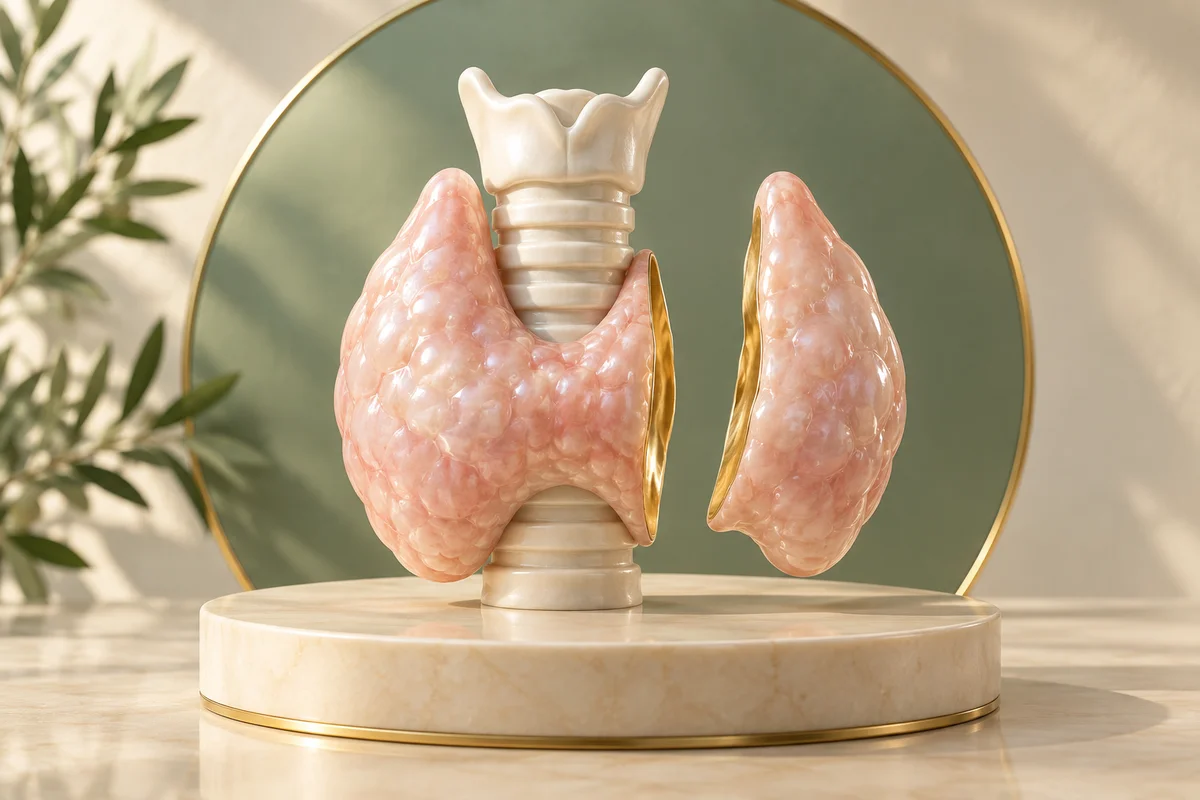
Concept of thyroid lobectomy
AI-created conceptual artwork; not a patient result or an exact surgical diagram.
2. Common diseases and symptoms
- An underactive thyroid may cause tiredness, cold intolerance, constipation and modest weight gain; Hashimoto’s disease is a common cause. An overactive thyroid may cause palpitations, tremor, sweating and weight loss; causes include Graves’ disease and overactive nodules. Symptoms alone cannot establish the diagnosis.
- A goitre is an enlarged thyroid. Nodules may be solid or fluid-filled and are often benign and symptom-free. Persistent neck swelling, hoarseness or difficulty swallowing should be assessed, even if thyroid blood tests are normal.
3. How is a thyroid nodule investigated?
- Assessment includes the history, neck examination, TSH and, when indicated, free T4/T3. Ultrasound assesses the gland, nodules and lymph nodes. A needle biopsy is selected according to ultrasound risk, nodule size and clinical context; not every nodule needs one.
- Bethesda describes the biopsy result, not the cancer stage. An inadequate or indeterminate result may require repeat sampling, selected molecular testing, surveillance or diagnostic surgery. A low TSH may prompt a thyroid scan; pregnancy must be disclosed before nuclear imaging.
4. Treatment without surgery
- Hypothyroidism is usually treated with levothyroxine rather than surgery. Hyperthyroidism may be managed with medicines, radioactive iodine or surgery according to its cause and personal circumstances. Benign nodules can often be monitored; selected symptomatic benign nodules may be suitable for ablation after proper assessment.
- Do not self-prescribe iodine, kelp products or thyroid hormones. Thyroid hormone is not a weight-loss treatment in people with normal thyroid function.
5. When might an operation be appropriate?
- Surgery may be considered for suspected or confirmed cancer, a compressive goitre, or selected cases of hyperthyroidism. Some small, low-risk cancers can be monitored in a specialist programme. The decision depends on biopsy, ultrasound, symptoms, extent of disease and your preferences.
6. Types of surgery
- Lobectomy removes one side, usually with the isthmus; total thyroidectomy removes the whole gland. Some patients need completion surgery later. Removal of lymph nodes is reserved for appropriate cancer indications and is not automatic for every nodule.
- The usual approach is through a lower-neck incision under general anaesthesia. Remote-access approaches suit selected patients and add specific risks. The operating team aims to preserve the voice nerves and parathyroid blood supply; nerve monitoring does not guarantee prevention of nerve injury.
7. Preparing for surgery
- Bring ultrasound and biopsy reports, previous neck-operation records and your complete medicine/supplement list. Report voice changes, pregnancy, allergies and blood thinners. The team may assess vocal-cord movement, calcium and vitamin D. Hyperthyroidism should be controlled before an elective operation.
- Follow personalised instructions about fasting and medication, including diabetes and weight-loss injections. Do not stop anticoagulants or thyroid medication yourself. Arrange transport and help at home.
8. Risks and realistic expectations
- Risks include bleeding into the neck, infection, anaesthetic complications, swallowing discomfort and voice changes. Voice-nerve injury and low calcium can be temporary or permanent. Low calcium is mainly a concern after total or completion thyroidectomy. Individual risk increases with complex or repeat surgery.
9. The first days and wound care
- Mild throat discomfort, neck stiffness and fatigue can occur. Start drinking and eating as the team permits; softer food may initially feel easier. Walk gently and use prescribed pain relief. Discharge may be the same day or after observation, depending on the operation and recovery.
- Follow your specific dressing and shower instructions. Avoid soaking an unhealed wound, picking skin glue, heavy lifting and strenuous exercise until cleared, often around two weeks. Protect a healed scar from sunlight; use scar products only when approved.
10. Hormones, calcium and food
- Lifelong levothyroxine is necessary after total thyroidectomy; some people also need it after lobectomy. Take it consistently as prescribed, usually with water on an empty stomach. Separate calcium or iron supplements by at least four hours. The dose is adjusted using blood tests, often about six to eight weeks after starting or changing treatment.
- Take calcium and vitamin D only according to the postoperative plan. A balanced diet is usually sufficient; a low-iodine diet is needed only when specifically prescribed for radioactive-iodine preparation.
11. Results and long-term follow-up
- Review the pathology, wound, voice and any calcium results at the booked visit. Cancer follow-up depends on tumour type and risk; not every cancer needs radioactive iodine. Further ultrasound, blood tests or treatment are individualised. Tell your clinician about planned pregnancy because hormone needs can change.
- Ask: Why this extent of surgery? Might I need lifelong medication or further treatment? When are my next blood tests, and whom should I contact after discharge?
12. Warning signs: do not wait
- Rapidly increasing neck swelling or tightness, breathing difficulty, noisy breathing or substantial bleeding require emergency help immediately: call 112 in Türkiye. Do not wait for a message reply.
- Tingling around the lips or fingers, cramps or spasms may indicate low calcium: contact the surgical team promptly. Severe spasms, breathing problems, fainting or seizures need emergency care. Fever, spreading redness, pus, worsening pain or inability to drink also require prompt assessment.
Sources
Was this guide helpful?
Your feedback helps us improve this guide.