In this guide
Understanding this topic
Weight-loss injections: what are they?
Prescription obesity medicines can include GLP-1 receptor agonists and dual GIP/GLP-1 medicines. They can reduce appetite and help people eat less, but they work best with nutrition, activity and follow-up. Nausea, vomiting, constipation or diarrhea can occur. These medicines are not used during pregnancy, and the correct drug depends on your medical history and other medicines.
NIDDK / FDAWhat these medicines are and how they work
- These are medical treatments for the chronic disease of obesity, not cosmetic injections or short-term fixes. They work alongside nutrition, physical activity, sleep and follow-up.
- GLP-1 medicines mimic a natural gut hormone, reducing appetite and cravings, increasing fullness, slowing stomach emptying and increasing insulin release when glucose is high.
- Tirzepatide activates both GIP and GLP-1 receptors and affects appetite, food intake and glucose control.
- Stopping treatment can allow appetite and weight to return; treatment duration depends on benefit, tolerability and medical review.

Supervised weight-management treatment
AI-created conceptual artwork; not a patient result or an exact surgical diagram.
Explore the educational diagram and sources
Educational illustration
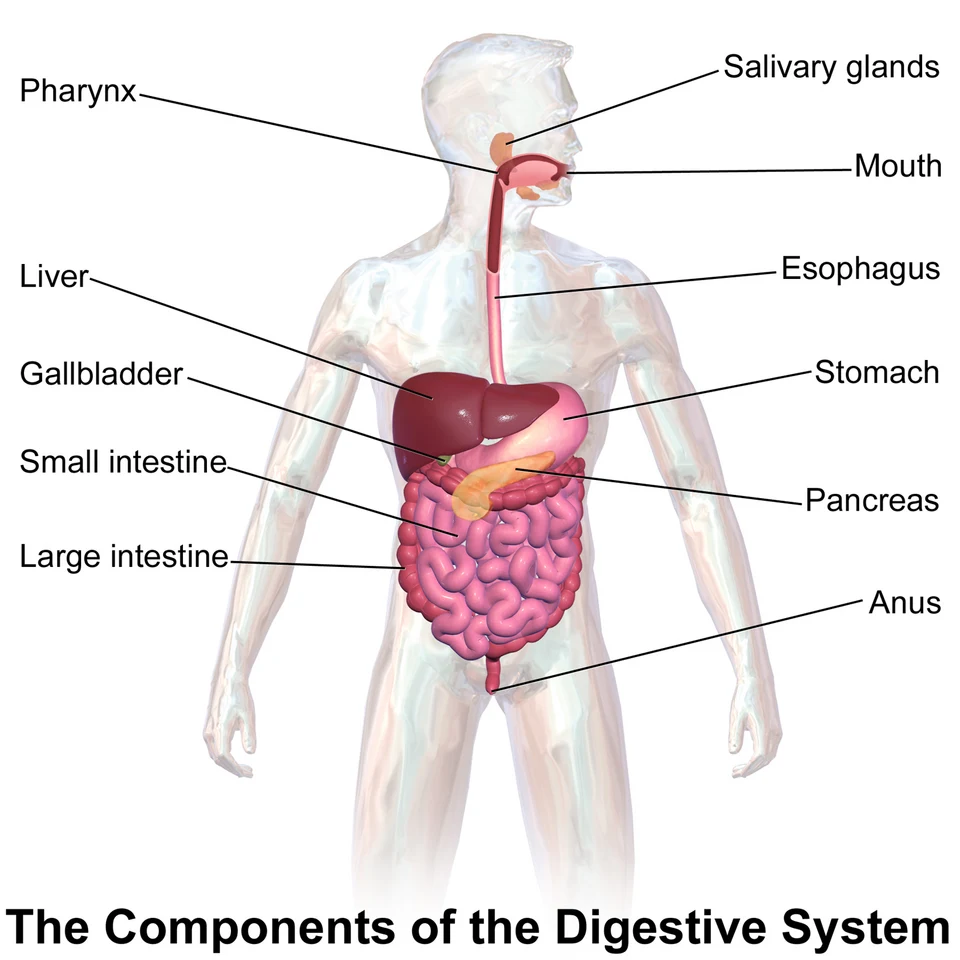
The digestive tract and associated organs: follow the route from the mouth to the intestine.
An educational schematic, not a patient result or a personalized treatment plan. Original labels may be in another language.
Open larger image ↗Source & licence
Blausen.com staff (2014), Medical gallery of Blausen Medical 2014, WikiJournal of Medicine 1(2), doi:10.15347/wjm/2014.010
Blausen 0316 DigestiveSystem.png · CC BY 3.0
Simplified educational image; not to scale.
Approved types and brand-name differences
- Liraglutide (Saxenda) is authorised for weight management and is generally injected daily.
- Injectable semaglutide (Wegovy) is authorised for weight management and is generally weekly. Ozempic is a semaglutide brand for type 2 diabetes and does not have the same indication as Wegovy.
- Tirzepatide is generally weekly: Mounjaro is authorised in the EU for type 2 diabetes and adult weight management, while Zepbound is the US weight-management brand.
- Some medicines such as dulaglutide are authorised for diabetes but not automatically for obesity treatment.
- Brands, ages, indications and availability vary by country and over time; check the local regulator and current prescription information.
- Retatrutide, cagrilintide and products labelled for research or not for human use are not approved for self-treatment.
Who may be eligible
- Many guidelines consider medicine for adults with BMI 30 or above, or BMI 27 or above with a weight-related condition; exact criteria depend on the product and country.
- Assessment includes diabetes, blood pressure, heart, kidney and liver disease, sleep apnoea, medicines, eating pattern, weight history and treatment goals.
- Report pancreatitis, gallstones or gallbladder inflammation, severe delayed stomach emptying, bowel obstruction or serious digestive disease, thyroid disease, personal or family medullary thyroid cancer or MEN2, and eating disorders.
- These medicines are not used for weight loss in pregnancy. Report pregnancy, breastfeeding or pregnancy plans; washout timing differs by drug.
- Insulin or sulfonylureas can increase hypoglycaemia risk and may require adjustment.
Starting treatment and injecting safely
- Start only by prescription after assessment and pen training. Treatment begins at a low dose and increases gradually; rapid escalation or dose jumping increases adverse effects.
- Usual subcutaneous sites are the abdomen, thigh or upper arm. Rotate sites and avoid red, painful, scarred or hardened skin.
- Injection timing, pen preparation and missed-dose rules differ by product; follow that product's leaflet and never double a dose.
- Never share pens, cartridges, needles or syringes and use a new needle each time.
- Store exactly as the leaflet directs, protected from light. Do not use medicine that froze, overheated, changed colour, looks cloudy when it should not, or has damaged packaging.
Common effects and practical care
- Nausea, fullness, belching or reflux, abdominal discomfort, vomiting, diarrhoea, constipation, headache, fatigue and injection-site reactions are common, especially after starting or dose escalation.
- Eat smaller meals slowly, stop at the first feeling of fullness and limit very fatty, fried, spicy and large meals.
- Sip fluids regularly; vomiting or diarrhoea can cause dehydration and kidney injury.
- Adequate protein and suitable resistance exercise help limit muscle loss; extreme under-eating is not the treatment goal.
- Do not alter or switch the dose yourself when symptoms occur; contact the prescriber about delaying escalation, stepping back or evaluating another cause.
Explore the educational diagram and sources
Educational illustration
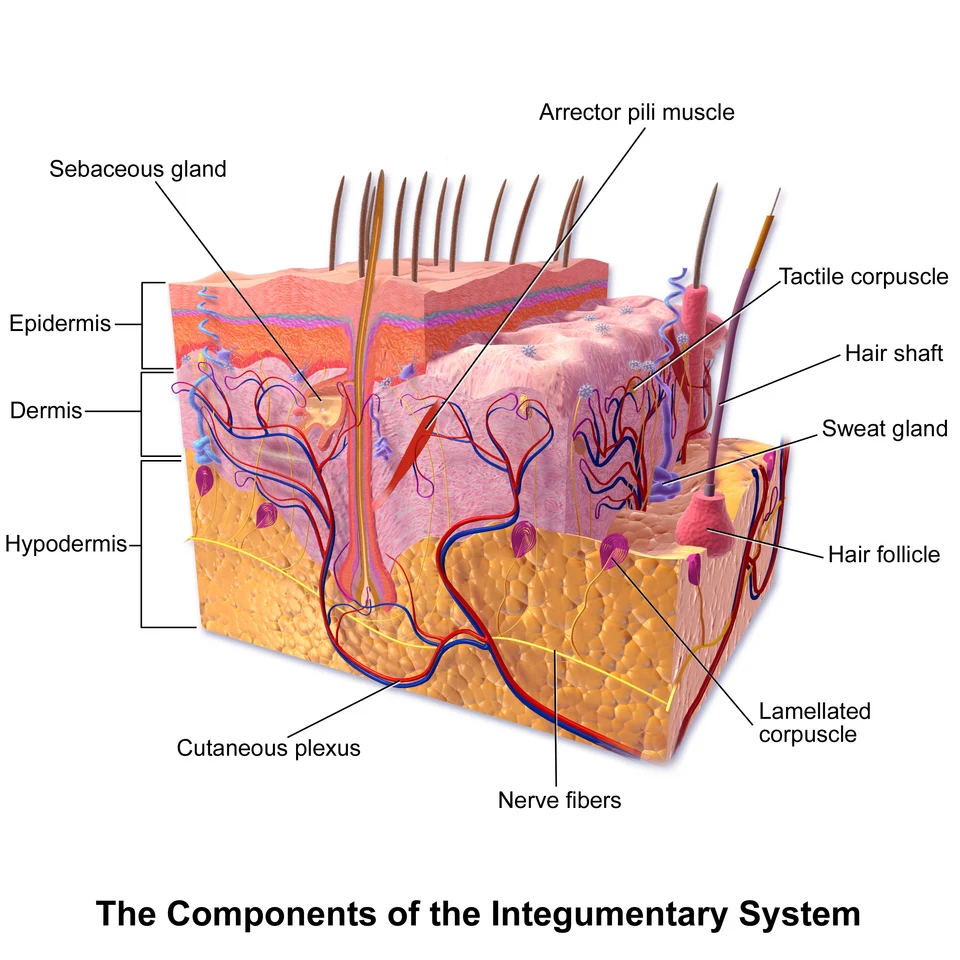
Skin layers, blood vessels and subcutaneous fat.
An educational schematic, not a patient result or a personalized treatment plan. Original labels may be in another language.
Open larger image ↗Source & licence
Blausen.com staff (2014), Medical gallery of Blausen Medical 2014, WikiJournal of Medicine 1(2), doi:10.15347/wjm/2014.010
Blausen 0810 SkinAnatomy 01.png · CC BY 3.0
Simplified educational image; not to scale.
Interactions and important precautions
- Do not combine two GLP-1 medicines or a GLP-1 medicine with tirzepatide unless a specialist explicitly directs it; combination is generally not recommended.
- Delayed stomach emptying can affect some oral medicines. Report every medicine, especially diabetes drugs and medicines with a narrow therapeutic range.
- Tirzepatide may reduce oral contraceptive effectiveness after starting and dose escalation; ask about a non-oral method or additional barrier protection according to the leaflet.
- Before surgery, endoscopy or anaesthesia, tell the surgeon and anaesthetist what you take and when the last dose was; do not stop it on your own.
- Do not choose a drug or dose based on a friend's result or social media advice.
Why unsupervised use is dangerous
- Starting too high, escalating too fast, injecting early or confusing milligrams with syringe units can cause severe vomiting, dehydration, electrolyte disturbance, kidney injury and hospitalisation.
- Social-media sellers, unlicensed clinics and unknown websites may supply counterfeit, contaminated, wrongly concentrated or improperly refrigerated products.
- Compounded products are not automatically equivalent to approved medicines. Semaglutide salt forms and multidose vials can differ in active ingredient, concentration and measurement.
- Use without assessment can miss hypoglycaemia, malnutrition, muscle loss and pancreatic, gallbladder, kidney or gastrointestinal disease.
- Obtain pens only from a licensed pharmacy with a prescription and check the active ingredient, dose, expiry and intact packaging.
Monitoring and reviewing results
- During initiation and escalation, track weight, waist, blood pressure, appetite, fluid and protein intake, activity and adverse effects.
- People with diabetes need glucose and HbA1c monitoring; kidney, liver and other tests depend on symptoms and medical history.
- If response is limited, review dose use, adherence, sleep, diet, activity, weight-promoting medicines and medical causes; more dose is not always better.
- Continue, change or stop treatment only after periodic review of effectiveness, tolerability, cost, supply and health status.
Urgent warning signs
- Severe persistent upper abdominal pain, especially radiating to the back or accompanied by vomiting, may indicate pancreatitis.
- Right-upper abdominal pain, fever, yellow eyes or skin, dark urine or pale stool may indicate gallbladder or bile-duct disease.
- Repeated vomiting, inability to drink, markedly reduced urine, dizziness, fainting, severe weakness or dehydration.
- A swollen abdomen with severe pain, complete constipation, inability to pass gas or persistent vomiting needs urgent assessment for obstruction or severe gut slowing.
- Face or tongue swelling, widespread hives, wheeze or breathing difficulty, severe hypoglycaemia, sudden visual change or any severe unusual symptom; do not take the next dose before medical assessment.
Sources
Was this guide helpful?
Your feedback helps us improve this guide.